Snake in the Eagle's Shadow Review: Kung Fu Learns to Laugh
Snake in the Eagle's Shadow is Yuen Woo-ping's 1978 kung fu comedy with Jackie Chan, a scrappy but lively blueprint for the training-film formula they soon refined.
★★★½☆ 3.5/5
Yes, with reservations. Jackie Chan fans and kung fu devotees should see where his comic style took shape; casual viewers may find the story thin and the humour dated.
Is Snake in the Eagle’s Shadow worth watching?
Yes, with a few allowances. Snake in the Eagle’s Shadow is a scrappy, likeable kung fu comedy, and the film in which Jackie Chan’s screen persona first clicks into place. Yuen Woo-ping’s debut as a director pairs slapstick with fight choreography of real intricacy, and the training sequences are still a pleasure. The reservations are a threadbare revenge plot, broad comedy that has aged unevenly, and the fact that the same team topped it within the year.
What is Snake in the Eagle’s Shadow about?
Jackie Chan plays a downtrodden orphan who works as the dogsbody at a martial arts school, where the instructors use him as a practice dummy and nobody takes him seriously. His luck turns when he befriends a ragged old man (Simon Yuen Siu-Tien) who turns out to be the last master of the snake fist style. The old man is being hunted by the master of the rival eagle’s claw school (Hwang Jang-Lee), who has vowed to wipe out the snake fist clan, and taking on a pupil puts both of them in his path.
Snake in the Eagle’s Shadow was directed by Yuen Woo-ping and opened in Hong Kong in March 1978. It is a Cantonese-language production running 98 minutes, and it has long circulated abroad in English-dubbed prints; where there is a choice, the original soundtrack suits it better.
The training scenes are the real story
The heart of the film is the long middle stretch between master and student, and it is where Yuen shows what he would bring to martial arts cinema for decades. Lessons are staged as comedy and choreography at once: the old man’s methods are part torment, part game, and Chan’s bruised persistence turns each exercise into a small physical gag. Instead of the stoic, invincible hero of earlier kung fu films, this student is clumsy, cheeky and frequently humiliated, and the film earns his progress by letting audiences laugh at his failures first.
Simon Yuen, the director’s father, is a delight as the grubby, mischievous teacher. He plays the old master as a trickster who happens to be lethal, and his rapport with Chan gives the film its warmth. The pair work like a comic double act that also fights, a dynamic so popular that Yuen Woo-ping reunited them almost immediately.
Hwang Jang-Lee keeps the stakes real
A kung fu comedy needs a villain who is not a joke, and Hwang Jang-Lee supplies one. The Korean kicking specialist brings a cold, economical menace, and his legwork is fast and precise enough that the danger never feels theoretical. Whenever he is on screen the tone tightens, and the contrast between his ruthlessness and the clowning elsewhere is a large part of why the formula works.
The fights reward close attention. They are long, intricate exchanges built on animal-style hand forms, shot wide enough that viewers can follow bodies moving through real space rather than a blur of cuts. Next to the stiffer studio kung fu that came before it, the movement feels quick, playful and inventive.
Where the formula still shows its seams
This is a first draft of a template, and in places it looks like one. The plot is little more than a delivery system for lessons and duels, and the supporting cast, from the bullying instructors to the rival schools, is sketched in single strokes. Some of the comedy is broad to the point of grating, with mugging that has dated faster than the action. Production values are those of a modest late-1970s Hong Kong programme picture, and the music and sound effects can be crude.
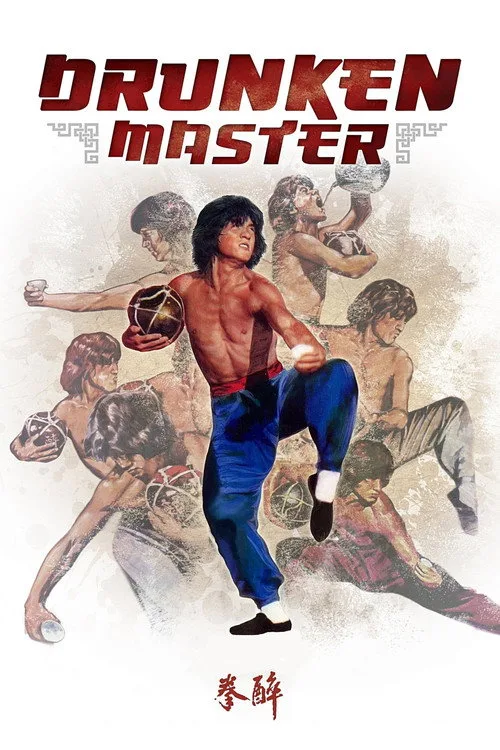
The bigger problem is a matter of timing. Drunken Master, released later in 1978 with the same director and leading trio, takes this structure and improves almost every part of it. Seen after that film, Snake in the Eagle’s Shadow can feel like a rehearsal; seen on its own terms, it has the energy of a team discovering what works.
Who should watch Snake in the Eagle’s Shadow?
It is close to essential for Jackie Chan fans and for anyone curious about how Hong Kong action cinema turned towards comedy at the end of the 1970s. At 98 minutes it moves briskly enough for a casual night in, provided viewers can accept dated dubbing and low-budget sets. The fight violence is frequent and includes a few killings, but it is handled in the stylised manner of the period, which makes it reasonable viewing for teenagers who enjoy martial arts.
Good next steps from the same shelf:
- Drunken Master, the follow-up from the same director and stars, and the sharper version of this formula.
- The Legend of Drunken Master, Chan’s 1994 return to the drunken style, with bigger stunts and far more polish.
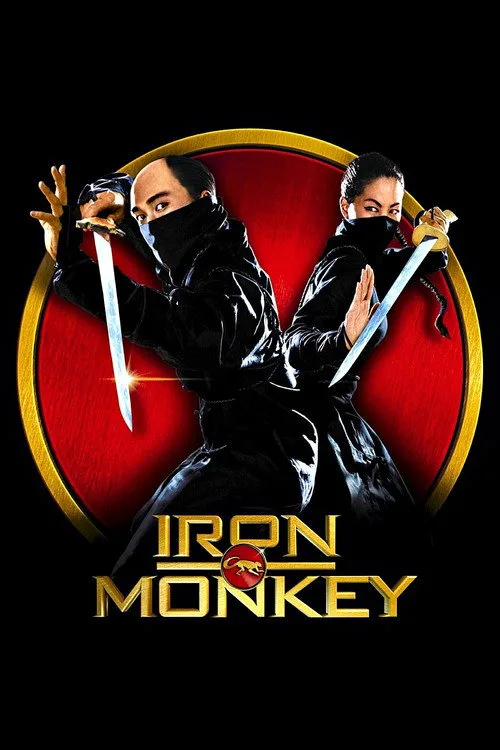
- Iron Monkey, Yuen Woo-ping’s later period kung fu film, for a more elegant take on the genre.
The verdict
Snake in the Eagle’s Shadow is rough around the edges and slight as a story, but it captures the moment Jackie Chan found his comic voice and Yuen Woo-ping found his directing one. The training scenes and Hwang Jang-Lee’s villainy still land, even if Drunken Master is the better starting point for newcomers.
Rating: 3.5/5
If you liked Snake in the Eagle's Shadow
Ranked by genre overlap and Celluloid Score. More movies like Snake in the Eagle's Shadow →
Where can I watch Snake in the Eagle's Shadow?
Regional notes: U-NEXT in Japan.