Rurouni Kenshin: The Legend Ends Review: The Vow Under Fire
Rurouni Kenshin Part III: The Legend Ends completes the Kyoto story as Takeru Satoh's Kenshin trains with his old master and faces Shishio in a thunderous finale.
★★★★½ 4.5/5
Yes. It is a rousing, superbly staged conclusion to the original trilogy, essential for anyone who has seen Kyoto Inferno, though it is not a standalone film.
Is Rurouni Kenshin: The Legend Ends worth watching?
Yes. Rurouni Kenshin Part III: The Legend Ends is a thunderous, satisfying conclusion to the Kyoto story and features some of the most thrilling sword fights in modern Japanese cinema. Keishi Otomo pays off the tension built in Kyoto Inferno with a finale that tests Kenshin’s vow to its limit. The reservations are a training section that slows the momentum and a climax that tips into manga-sized excess, but the payoff is worth it.
What is Rurouni Kenshin: The Legend Ends about?
The film picks up directly after Kyoto Inferno. Makoto Shishio (Tatsuya Fujiwara) and his followers are poised to strike at the heart of the Meiji government, with a powerful ironclad warship as their trump card. Kenshin Himura (Takeru Satoh), knowing he is not yet strong enough to stop him, seeks out his old master to learn the final technique of his sword style. As Kenshin trains, his allies regroup for a decisive confrontation, and the question of whether he can win without abandoning his vow never to kill becomes impossible to avoid.
Rurouni Kenshin Part III: The Legend Ends is directed by Keishi Otomo, adapted from Nobuhiro Watsuki’s manga. Emi Takei, Munetaka Aoki, Yu Aoi and Yosuke Eguchi return. It is a Japanese production in Japanese, runs 135 minutes, and reached cinemas in September 2014, only weeks after Kyoto Inferno.
A master and a student
The film’s most unusual section is its first act, which slows the pace for a series of lessons between Kenshin and his gruff, sardonic master, played by Masaharu Fukuyama. These scenes are less about sword technique than about the reason Kenshin fights at all, and they add a philosophical layer to the franchise. The master’s teachings reframe the hero’s vow not as weakness but as a discipline that must be earned.
Takeru Satoh gives these scenes real humility, showing a warrior willing to be humbled. It is a welcome contrast to the explosive action elsewhere, even if the section occasionally feels like a pause in the main story.
A finale built for the big screen
Once the pieces are in place, The Legend Ends delivers a spectacular final act. The action team combines the franchise’s trademark speed with a new sense of scale, staging fights across multiple opponents and locations while keeping the choreography clear. The duels between Kenshin’s allies and Shishio’s elite fighters are paid off in style, and the long-awaited confrontation with Shishio himself has the physical intensity the whole trilogy has been building toward.
Tatsuya Fujiwara’s Shishio remains a mesmerising villain, driven by a nihilistic belief that the strong should rule and the weak should perish. His conflict with Kenshin feels like a clash of worldviews as much as swords, and it gives the climax genuine thematic weight.
Where the scale overwhelms
The final battle is so ambitious that it occasionally loses its grounding. Some of the choreography moves into the realm of anime exaggeration, and the film’s sense of physical danger slips when characters survive blows that should stop them. A subplot involving the government’s political manoeuvring is also underdeveloped, adding complication without much depth. These flaws are minor compared with the film’s energy, but they keep it just short of perfection.
Who should watch Rurouni Kenshin: The Legend Ends?
It is essential for anyone who has watched Kyoto Inferno, and a treat for fans of the manga and of Japanese action cinema. This is not a standalone film: watch the first two parts first, ideally with The Legend Ends following Kyoto Inferno closely. The violence is frequent and intense, with bloody swordfights and brutal injuries, but it is stylised enough to suit older teenagers and adults.
Continue the saga:
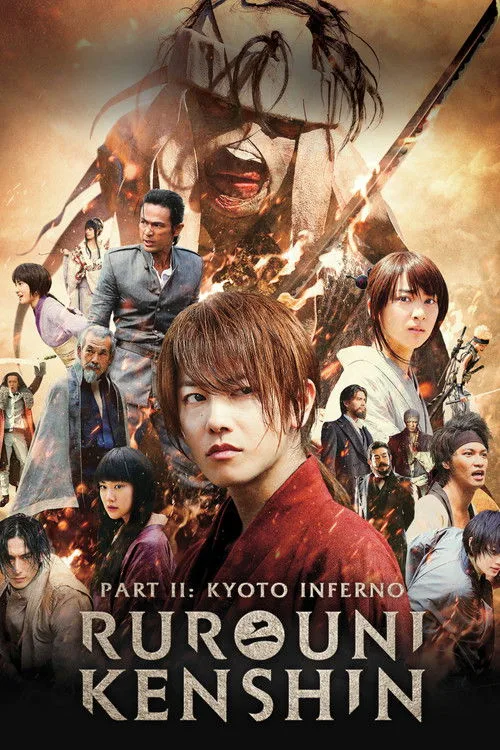
- Rurouni Kenshin Part II: Kyoto Inferno, the essential first half of this story.
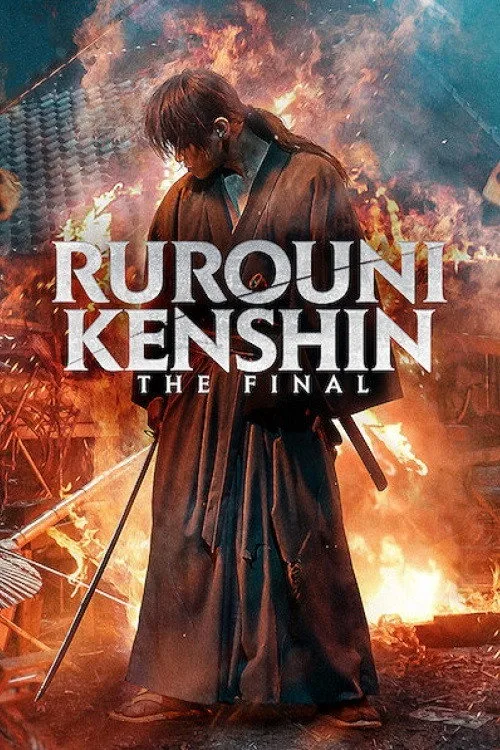
- Rurouni Kenshin: The Final, the later chapter in which Kenshin faces a far more personal enemy.
- Demon Slayer: Mugen Train, an animated Japanese blockbuster with a similar love of swordplay and heroic sacrifice.
The verdict
Rurouni Kenshin: The Legend Ends is a stirring finale that delivers on the promise of the trilogy, balancing breathtaking action with a serious reflection on violence and restraint. Its training section drags and its climax strains belief, but it remains one of the most exciting live-action manga adaptations ever made.
Rating: 4.5/5
Availability is a catalogue snapshot and can change. Confirm with the provider in your region.
Where to watch Rurouni Kenshin Part III: The Legend Ends
Streaming: Netflix
By region: Netflix in the United States; Netflix in the United Kingdom; Netflix in Indonesia; Netflix in India
Full scores and availability on the movie page.
If you liked Rurouni Kenshin Part III: The Legend Ends
Ranked by genre overlap and Celluloid Score. More movies like Rurouni Kenshin Part III: The Legend Ends →
 Tokyo 2014
Rurouni Kenshin Part II: Kyoto Inferno
Action, Adventure · 2h 18m
 Tokyo 2012
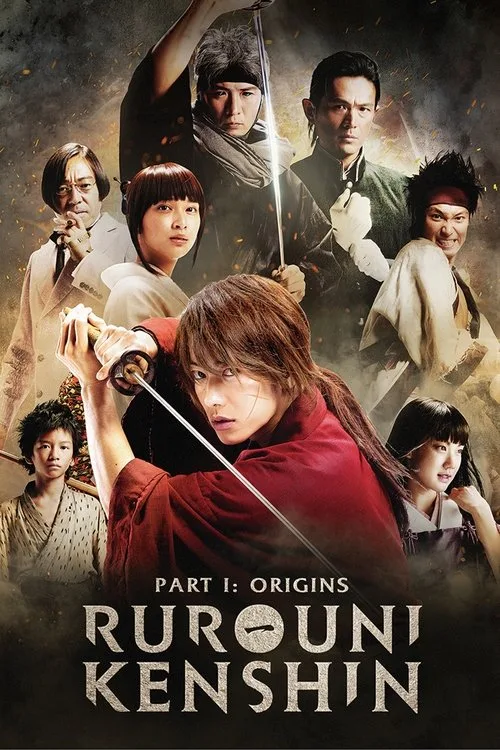
Rurouni Kenshin Part I: Origins
Action, Adventure · 2h 14m
 Tokyo 2021
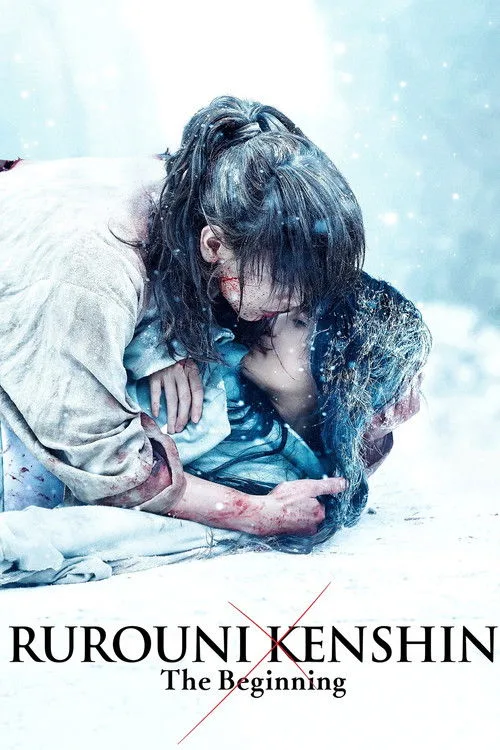
Rurouni Kenshin: The Beginning
Action, Adventure · 2h 18m
 Tokyo 2021
Rurouni Kenshin: The Final
Action, Adventure · 2h 18m
Where can I watch Rurouni Kenshin Part III: The Legend Ends?
Streaming: Netflix. Regional notes: Netflix in the United States; Netflix in the United Kingdom; Netflix in Indonesia; Netflix in India.