Rurouni Kenshin: The Beginning Review: Tragedy Before Legend
Rurouni Kenshin: The Beginning is the saga's sombre prequel, following Takeru Satoh's young assassin and Kasumi Arimura's grieving Tomoe through Bakumatsu Kyoto.
★★★★★ 5/5
Yes. It is the finest Rurouni Kenshin film, a tragic samurai romance of real beauty, best watched after the earlier films but powerful enough to stand on its own.
Is Rurouni Kenshin: The Beginning worth watching?
Yes. Rurouni Kenshin: The Beginning is the most beautiful and emotionally powerful film in the series, a sombre period tragedy that reveals the wound behind the wandering swordsman. Takeru Satoh gives his best performance of the saga, and Kasumi Arimura is quietly extraordinary opposite him. The only real caution is tonal: fans expecting the playful energy and rapid-fire battles of the earlier films will find something slower, colder and far more melancholy.
What is Rurouni Kenshin: The Beginning about?
Before he was the gentle wanderer of the earlier films, Kenshin Himura (Takeru Satoh) was Battosai, a young assassin working for the revolutionary forces trying to bring down the shogunate in Kyoto during the violent last years of the Bakumatsu. He kills efficiently and without emotion, an instrument of politics. Then he meets Tomoe Yukishiro (Kasumi Arimura), a quiet young woman carrying a grief of her own, and his life begins to change in ways neither of them can control.
Rurouni Kenshin: The Beginning is directed by Keishi Otomo, who made all five films, and adapted from the Remembrance arc of Nobuhiro Watsuki’s manga. Issey Takahashi, Nijiro Murakami, Masanobu Ando and Kazuki Kitamura appear in the supporting cast. It is a Japanese production in Japanese, runs 138 minutes, and was released in 2021 as the companion piece to The Final.
A colder, sadder Kenshin
Takeru Satoh has played Kenshin across a decade, and The Beginning shows how completely he understands the character. Here there is none of the goofy politeness of the wanderer. His young Battosai is closed off, watchful and dangerous, speaking little and moving with lethal economy. The fights are shorter, bloodier and far less joyful than in the earlier films, and that is the point: this is violence as a job, and the film makes its cost visible.
Arimura’s Tomoe is the heart of the film. She plays grief with extraordinary restraint, and the gradual thaw between her and Kenshin is built from small gestures, shared silences and domestic routines rather than declarations. Their relationship turns what could have been simply an origin story into a genuine romance.
Rain, silence and a sense of inevitability
Otomo’s visual approach shifts to match the story. Kyoto is shown in muted colours, in rain-soaked alleys and dark interiors, and scenes away from the city have a stillness that feels almost like a painting. The action remains precise, with a memorable encounter during the political turmoil of the era showing off the franchise’s trademark speed, but the film is more interested in stillness than spectacle.
The tone is shaped by something the film cannot avoid: audiences who know the saga already know the man Kenshin will become. That knowledge gives every tender moment an ache, and Otomo leans into it with a patience rare in franchise filmmaking.
A demanding change of pace
The Beginning’s seriousness is its triumph, but it will not suit every viewer. The political background, with its competing factions of the late shogunate era, is sketched quickly and may confuse newcomers. Some supporting characters exist mainly to advance the plot, and the pacing is deliberately slow in its middle section. These are minor quibbles, but they explain why some fans of the lighter films find it less fun.
Who should watch Rurouni Kenshin: The Beginning?
It is essential for fans of the Rurouni Kenshin franchise and a strong recommendation for anyone who loves tragic romance or serious samurai drama. It works best after the other films, especially The Final, but it can be watched alone as a self-contained period tragedy. The violence is frequent and bloody, and the themes of loss and guilt are heavy, making it best for mature teenagers and adults.
Where to go next:
- Rurouni Kenshin: The Final, its companion film, set years later, in which the past depicted here returns.
- Rurouni Kenshin Part I: Origins, to see the gentle wanderer this assassin becomes.
- Harakiri, a classic samurai tragedy that shares its sorrowful view of violence and duty.
The verdict
Rurouni Kenshin: The Beginning is a haunting, beautifully controlled prequel that transforms a popular action franchise into genuine tragedy. Its pace and seriousness will not suit everyone, but Satoh and Arimura’s performances and Otomo’s elegiac direction make it the crowning film of the saga.
Rating: 5/5
Availability is a catalogue snapshot and can change. Confirm with the provider in your region.
Where to watch Rurouni Kenshin: The Beginning
Streaming: Netflix
By region: Netflix in the United States; Netflix in the United Kingdom; Netflix in Indonesia; Netflix in India
Full scores and availability on the movie page.
If you liked Rurouni Kenshin: The Beginning
Ranked by genre overlap and Celluloid Score. More movies like Rurouni Kenshin: The Beginning →
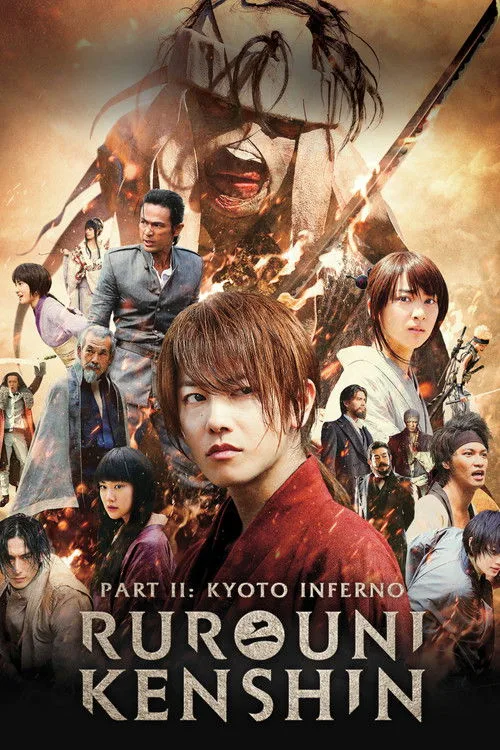 Tokyo 2014
Rurouni Kenshin Part II: Kyoto Inferno
Action, Adventure · 2h 18m
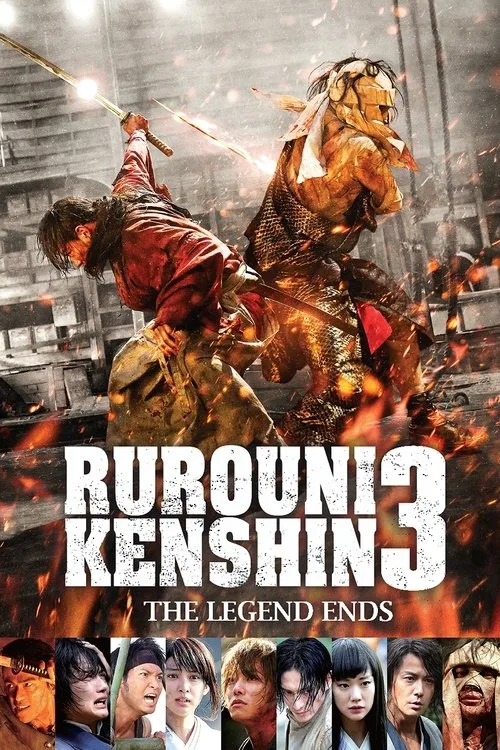 Tokyo 2014
Rurouni Kenshin Part III: The Legend Ends
Action, Adventure · 2h 15m
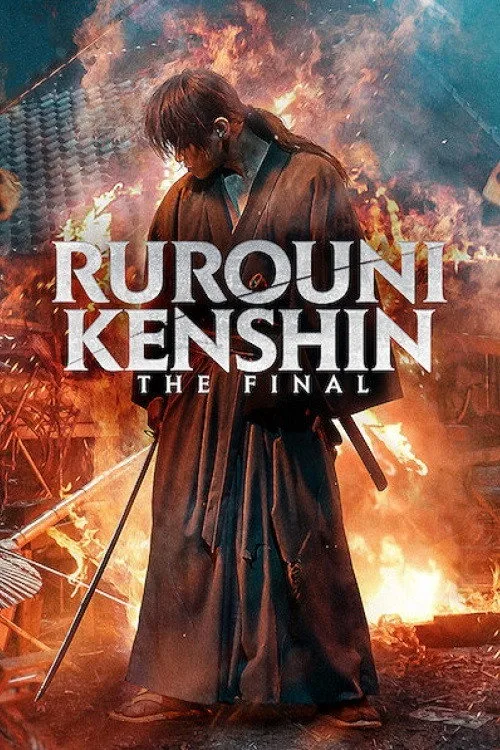 Tokyo 2021
Rurouni Kenshin: The Final
Action, Adventure · 2h 18m
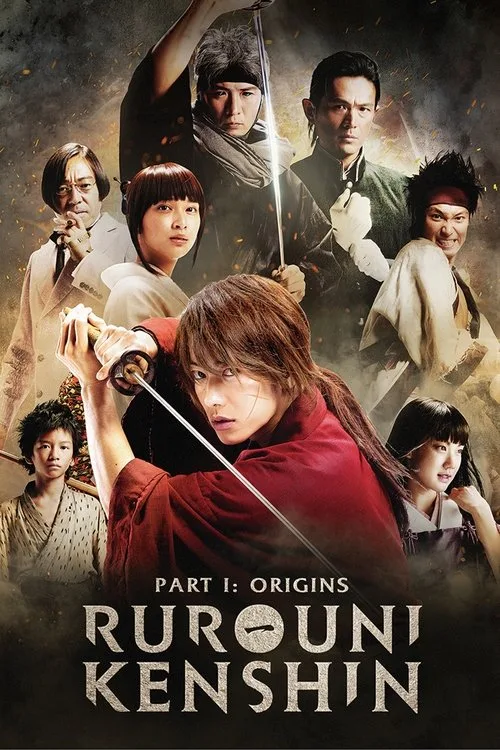 Tokyo 2012
Rurouni Kenshin Part I: Origins
Action, Adventure · 2h 14m
Where can I watch Rurouni Kenshin: The Beginning?
Streaming: Netflix. Regional notes: Netflix in the United States; Netflix in the United Kingdom; Netflix in Indonesia; Netflix in India.