The Pianist (2002) Review: Survival Without Heroics
The Pianist is Roman Polanski's Holocaust drama about Władysław Szpilman's survival in occupied Warsaw, an austere, harrowing film anchored by Adrien Brody.
★★★★½ 4.5/5
Yes. It is one of the most powerful films about the Holocaust, essential for viewers ready for a harrowing, unsentimental portrait of survival in wartime Warsaw.
Is The Pianist worth watching?
Yes. The Pianist is a devastating, clear-eyed account of the Holocaust in Warsaw, and one of the few films on the subject that refuses to turn survival into a story of heroism. Roman Polanski films the destruction of a city and its Jewish population with cold precision, and Adrien Brody gives the performance of his career as a man who endures largely through luck and the kindness of others. The reservation is that its protagonist is deliberately passive, which makes the long second half emotionally distant for some viewers.
What is The Pianist about?
The Pianist tells the true story of Władysław Szpilman (Adrien Brody), a celebrated Polish-Jewish pianist who plays for Polish Radio in Warsaw when German forces invade in 1939. As the occupation tightens, Szpilman, his parents (Frank Finlay and Maureen Lipman), his brother Henryk (Ed Stoppard) and his sisters face escalating restrictions, humiliations and violence.
The family is forced into the Warsaw Ghetto, where hunger, disease and brutality become daily life. Szpilman finds work playing piano in a café, trying to keep his family afloat as conditions worsen and rumours spread about what deportation really means. The story then follows his desperate struggle to stay alive in a city being systematically emptied and destroyed.
Polanski, himself a child survivor of the Kraków Ghetto, directed from a screenplay by Ronald Harwood based on Szpilman’s memoir. The film is a European co-production in English, runs 150 minutes and won the Palme d’Or at Cannes in 2002, along with Oscars for Polanski, Harwood and Brody.
Polanski’s refusal to sentimentalise
What sets The Pianist apart is its tone. Polanski presents atrocities with a flat, observational calm that makes them all the more shocking. Violence erupts without warning or musical cue, often in the background of a shot, and the camera frequently adopts Szpilman’s point of view: watching from windows and doorways, seeing horror he is powerless to stop.
That restraint reflects the source material and Polanski’s own memories. There are no grand speeches, no conventional acts of resistance by the hero and little in the way of redemption. Pawel Edelman’s cinematography moves from the warm interiors of pre-war Warsaw to the grey, rubble-strewn wasteland of the later ghetto, charting a civilisation’s collapse through its architecture.
Adrien Brody’s physical transformation
Brody’s performance is remarkable for how much it conveys with so little dialogue. In the early scenes, Szpilman is elegant, a little vain and absorbed in his music. As the film progresses, Brody physically wastes away, and his gestures shrink to those of a man trying to be invisible. Much of the second half is almost wordless, relying entirely on his face, posture and silence.
Music is central but never used as easy uplift. Chopin’s piano works appear at key moments, and the film is acutely aware of how cruelly art and survival sit together: Szpilman’s gift cannot save him or his family, and for long stretches he is unable to play at all.
Where the distance shows
Because Szpilman survives largely through chance and the courage of others rather than his own actions, the film can feel episodic, moving from hiding place to hiding place. Some supporting characters appear only briefly, and viewers seeking a more conventional emotional arc may find the second half cold. The use of English with British accents for Polish characters is a convention some will find distracting.
Who should watch The Pianist?
It is essential viewing for anyone interested in the Second World War, Holocaust history or serious war drama. It is harrowing: the film includes executions, brutality against civilians, starvation and the destruction of Warsaw, depicted with frankness, and it is rated R in the US. Older teenagers studying the period may find it valuable with guidance. At two and a half hours, it requires a quiet evening and full attention.
Films that pair with it:
- Schindler’s List, Steven Spielberg’s Holocaust epic, which approaches the same history through a rescuer rather than a survivor.
- Amour, Michael Haneke’s Palme d’Or winner about a couple of retired music teachers, for another unflinching study of endurance.
The verdict
The Pianist is an austere, profoundly moving film about survival in the face of genocide, told without melodrama and anchored by one of the great screen performances of its decade. Its passive protagonist and slow second half demand patience, but the result is one of the most honest and haunting Holocaust films ever made.
Rating: 4.5/5
Availability is a catalogue snapshot and can change. Confirm with the provider in your region.
Where to watch The Pianist
Streaming: Peacock
Rent: Amazon Video, Apple TV, Google Play, YouTube, Fandango at Home
Buy: Amazon Video, Apple TV, Google Play, YouTube, Fandango at Home
By region: Peacock in the United States; StudioCanal Presents in the United Kingdom; U-NEXT in Japan; Lionsgate Play in Malaysia
Full scores and availability on the movie page.
If you liked The Pianist
Ranked by genre overlap and Celluloid Score. More movies like The Pianist →
 Featured
Schindler's List
Drama, History · 3h 15m
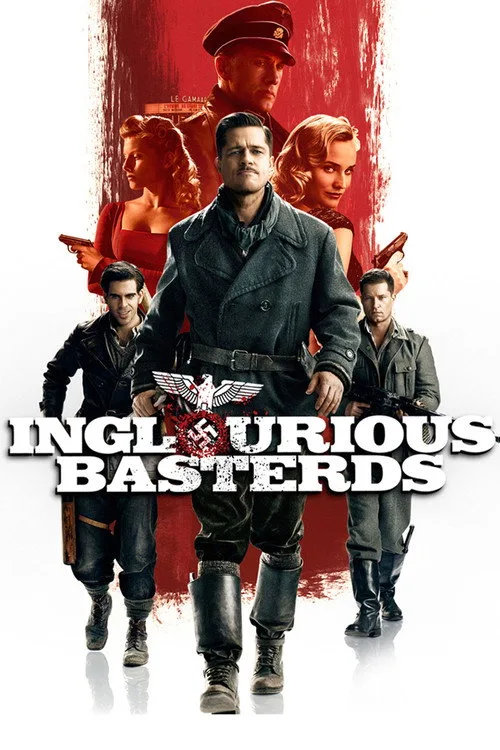 Cannes 2009
Inglourious Basterds
Drama, Thriller · 2h 33m
 Cannes 2006
The Wind That Shakes the Barley
Drama, War · 2h 7m
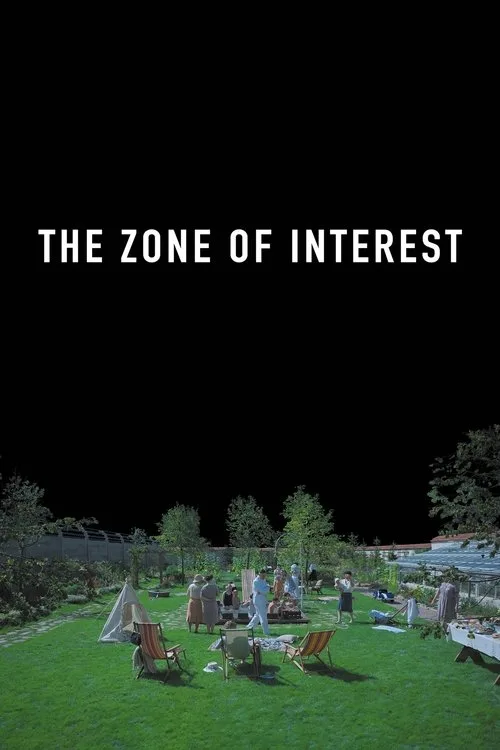 Cannes 2023
The Zone of Interest
Drama, History · 1h 45m
Where can I watch The Pianist?
Streaming: Peacock. Rent: Amazon Video, Apple TV, Google Play, YouTube, Fandango at Home. Buy: Amazon Video, Apple TV, Google Play, YouTube, Fandango at Home. Regional notes: Peacock in the United States; StudioCanal Presents in the United Kingdom; U-NEXT in Japan; Lionsgate Play in Malaysia.