Schindler's List (1993) Review: Rescue in Black and White
Schindler's List is Steven Spielberg's black-and-white Holocaust drama about a German industrialist who saved his Jewish workers, still his most searing film.
★★★★½ 4.5/5
Yes. It is one of the essential films about the Holocaust, for adult viewers ready for three hours of harrowing, unflinching history and a complex central figure.
Is Schindler’s List worth watching?
Yes. Schindler’s List is Steven Spielberg’s most serious and most devastating film, a Holocaust drama that stays with viewers long after its three hours are over. Its power lies in the tension between a morally compromised hero and the systematic cruelty around him, rendered in stark black and white with almost documentary force. The reservation, raised by critics since its release, is that it sometimes reaches for emotional uplift and centres its rescuer more than the people he rescued.
What is Schindler’s List about?
Schindler’s List tells the true story of Oskar Schindler (Liam Neeson), a German businessman and Nazi Party member who arrives in occupied Kraków at the start of the Second World War looking to get rich. He takes over an enamelware factory and staffs it with Jewish workers from the city’s ghetto, because they are cheaper than Polish labour.
His accountant, Itzhak Stern (Ben Kingsley), quietly turns the factory into a refuge, and as the persecution of Kraków’s Jews intensifies, Schindler’s relationship with his workers begins to change. Standing against him is Amon Göth (Ralph Fiennes), the SS officer who commands the nearby Płaszów labour camp and treats the lives of its prisoners as his to take.
Spielberg directs from Steven Zaillian’s screenplay, adapted from Thomas Keneally’s book about Schindler. It is an American production in English, it runs 195 minutes, and it won seven Academy Awards, including Best Picture and Best Director.
Black and white as a moral language
Spielberg and cinematographer Janusz Kamiński shoot the film almost entirely in black and white, often with handheld cameras, and the choice is fundamental. It makes the film feel like recovered newsreel, stripping away the gloss of a studio period piece. The liquidation of the Kraków ghetto, shown with a chaotic, roving camera, is among the most harrowing sequences in mainstream cinema, and a rare use of colour within it has become one of the most discussed images in film history.
John Williams’s score, built around a mournful solo violin, is restrained by his usual standards, and much of the film’s horror plays with very little music at all. Spielberg, known for spectacle, largely resists it here; the terror comes from the arbitrariness of violence rather than from staging.
Three performances, three kinds of power
Neeson’s Schindler is the film’s great ambiguity: charming, vain, opportunistic and, eventually, something more. Neeson never makes the change easy or sudden, and the film is wise enough not to explain him completely. Kingsley gives Stern a watchful intelligence, a man who must negotiate for lives using the language of business.
Ralph Fiennes’s Göth is the performance people remember. He plays the commandant not as a monster but as a bored, self-pitying man with unlimited power, and that ordinariness is what makes him so frightening. His scenes with Embeth Davidtz, as a Jewish prisoner forced to work in his house, are some of the most disturbing in the film.
Where the film reaches for comfort
For all its rigour, Schindler’s List is still a Hollywood drama about a rescuer, and some viewers find its focus uncomfortable. Most of the Jewish characters, Stern aside, are glimpsed rather than developed, and in its final hour the film occasionally leans toward sentiment and suspense in ways that feel more conventional than the rest. These criticisms are fair, but they do not undo the film’s achievement.
Who should watch Schindler’s List?
It is essential viewing for adults and older teenagers interested in history, the Holocaust or the craft of serious filmmaking. The running time is long, and the content is extremely difficult: mass killing, executions, sexual menace, nudity in the camps and pervasive cruelty. Many schools use it in teaching, but it is not a film to watch casually.
If you want to continue:
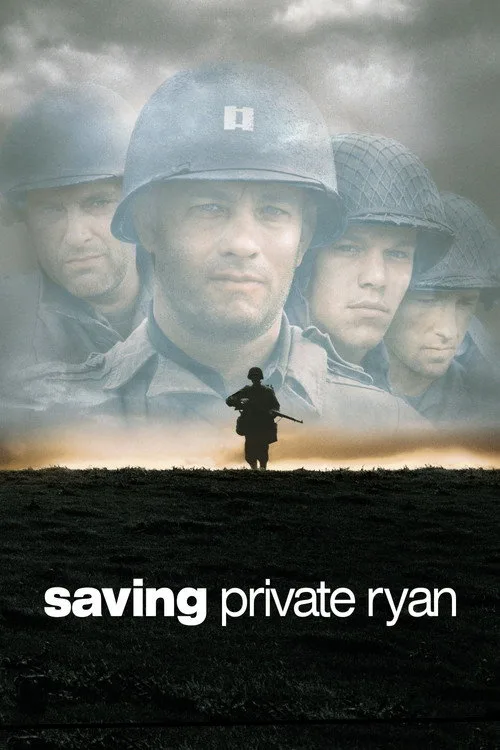
- Saving Private Ryan, Spielberg’s other defining Second World War film, a combat drama with an equally uncompromising approach to violence.
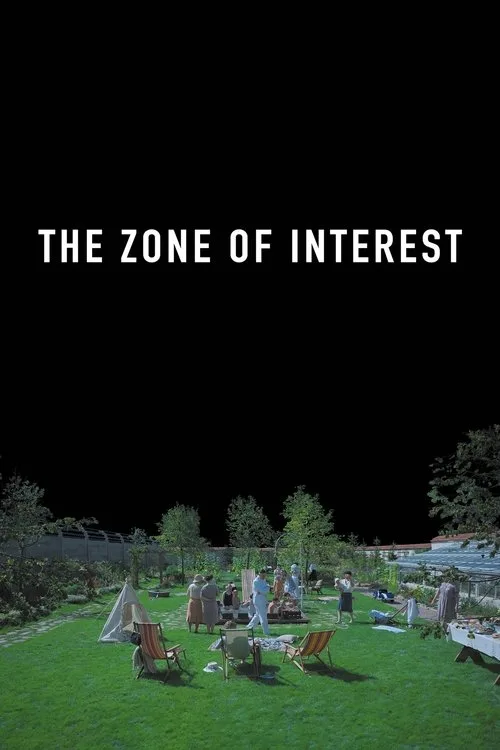
- The Zone of Interest, a modern counterpoint that watches the Holocaust from the domestic world of a camp commandant and keeps the atrocity off screen.
- The Fabelmans, for a lighter, personal look at the director who made both.
The verdict
Schindler’s List is a monumental work of historical cinema, anchored by three superb performances and a visual style that feels like witness rather than recreation. Its occasional turns toward uplift are a fair point of debate, but it remains one of the essential films of its decade and among the most important Holocaust dramas ever made.
Rating: 4.5/5
Availability is a catalogue snapshot and can change. Confirm with the provider in your region.
Where to watch Schindler's List
Not confirmed on major subscription platforms in our US baseline — check regional listings.
Rent: Amazon Video, Apple TV, Google Play, YouTube, Fandango at Home
Buy: Amazon Video, Apple TV, Google Play, YouTube, Fandango at Home
By region: Prime Video in the United Kingdom; Prime Video, Disney+ Hotstar in India; Wavve in South Korea; Prime Video, U-NEXT in Japan
Full scores and availability on the movie page.
If you liked Schindler's List
Ranked by genre overlap and Celluloid Score. More movies like Schindler's List →
 Cannes 2002
The Pianist
Drama, War · 2h 30m
 Featured
Saving Private Ryan
War, Drama · 2h 49m
 Cannes 2023
The Zone of Interest
Drama, History · 1h 45m
Braveheart
Action, Drama · 2h 58m
Where can I watch Schindler's List?
Rent: Amazon Video, Apple TV, Google Play, YouTube, Fandango at Home. Buy: Amazon Video, Apple TV, Google Play, YouTube, Fandango at Home. Regional notes: Prime Video in the United Kingdom; Prime Video, Disney+ Hotstar in India; Wavve in South Korea; Prime Video, U-NEXT in Japan.