The Odyssey (2026) Review: Homer, Writ Large in IMAX
The Odyssey is Christopher Nolan's IMAX-shot adaptation of Homer, with Matt Damon as Odysseus, a staggering visual epic whose heart sometimes lags behind its scale.
★★★★★ 5/5
Yes. It is one of the most extraordinary-looking blockbusters in years and worth seeing on the largest screen possible, even if it is easier to admire than to love.
Is The Odyssey worth watching?
Yes. Christopher Nolan’s The Odyssey is a monumental piece of filmmaking, an adaptation of Homer that looks like nothing else in current cinema and treats the ancient poem with intelligence rather than mere reverence. Its images of sea, storm and monster are overwhelming, and Matt Damon gives the voyage a weary, human centre. The reservation is emotional distance: across nearly three hours, the film dazzles more often than it moves, and its second half does not always keep up its momentum.
What is The Odyssey about?
The Odyssey adapts the Greek epic attributed to Homer. After the long war at Troy, Odysseus, king of the island of Ithaca (Matt Damon), sets sail for home, and his journey stretches into years of storms, strange islands, monsters and the anger of the gods.
On Ithaca, his wife, Penelope (Anne Hathaway), holds together a household and a kingdom besieged by suitors who assume the king is dead, while their son, Telemachus (Tom Holland), grows up in his father’s absence and begins to search for answers of his own. The deep supporting cast includes Zendaya, Robert Pattinson, Charlize Theron, Lupita Nyong’o, Elliot Page, Jon Bernthal and John Leguizamo.
Nolan wrote and directed this American production, which runs 173 minutes in English and was shot entirely with IMAX film cameras.
A film built for the biggest screen
The case for The Odyssey starts with its images. Nolan has always preferred physical filmmaking to digital shortcuts, and here that preference becomes the whole aesthetic. Storm-lashed coastlines, firelit halls and the vast darkness of the Cyclops’s cave are photographed with a depth and clarity that few modern blockbusters even attempt. The seascapes, in particular, give the sense of a world too big for any one man to master, which is exactly the point of the story.
The sound and music push the same way, heavy and elemental, so that the sea feels like an adversary rather than a backdrop. On a large-format screen, the effect is genuinely overwhelming; on a television, some of that force will inevitably be lost.
Nolan’s structure suits Homer’s
The smartest choice is structural. Homer’s poem does not tell its story in a straight line; it moves between Ithaca and the wandering hero, and much of Odysseus’s journey is recounted as a story within the story. Nolan, a filmmaker preoccupied with time and memory since Memento, embraces that fracture instead of smoothing it into a simple voyage. The result makes storytelling itself a subject, with Odysseus as a hero whose cunning and self-mythologising are part of who he is.
Damon plays him as a man worn down by his own cleverness, physically committed and increasingly haunted. Hathaway makes a great deal of Penelope’s comparatively limited screen time, suggesting a parallel siege of patience and political survival on Ithaca. Not every thread lands equally, though: Holland’s Telemachus is the film’s flattest register, and some of the starry supporting cast have little room to make an impression.
Where the scale outruns the feeling
At 173 minutes, The Odyssey is built primarily around spectacle, and its emotional pull does not always match its size. The dialogue, translating verse into plain prose, sheds some of the poem’s lyricism for efficiency, and the back half occasionally luxuriates in images when it should propel the story forward. It is a film to admire with complete sincerity, and slightly harder to love.
Who should watch The Odyssey?
It is for anyone who loves grand adventure cinema, Greek mythology or Nolan’s large-format filmmaking, and it rewards seeing it in a cinema with the best possible projection. Knowledge of Homer is not required, though readers of the poem will enjoy spotting how Nolan reshapes it. Expect battle violence, frightening creatures and some intense imagery, which make it best suited to older teenagers and adults.
If it works for you, try:
- Dunkirk, Nolan’s other elemental sea-and-survival epic, which is similarly built for IMAX.
- Interstellar, his most emotional voyage story, about a parent separated from a child by time and distance.
The verdict
The Odyssey is a staggering technical achievement and a thoughtful reading of Homer, anchored by Matt Damon’s weathered hero and some of the most astonishing images of the decade. Its length and emotional reserve keep it short of Nolan’s very best, but on a giant screen it is an experience few films can match.
Rating: 5/5
If you liked The Odyssey
Ranked by genre overlap and Celluloid Score. More movies like The Odyssey →
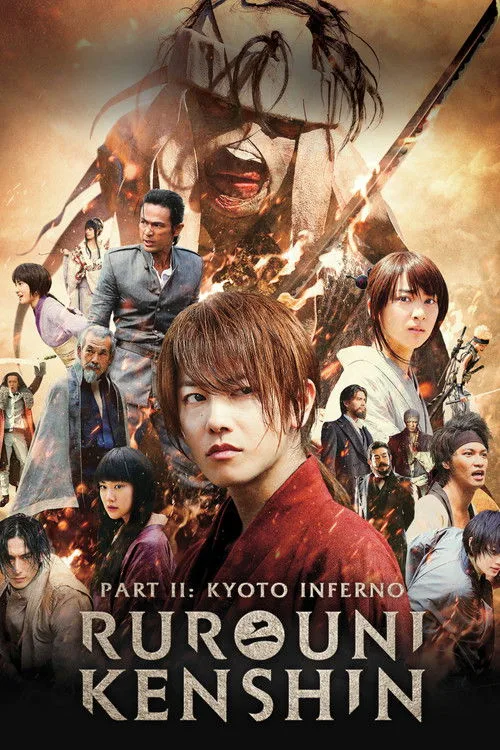 Tokyo 2014
Rurouni Kenshin Part II: Kyoto Inferno
Action, Adventure · 2h 18m
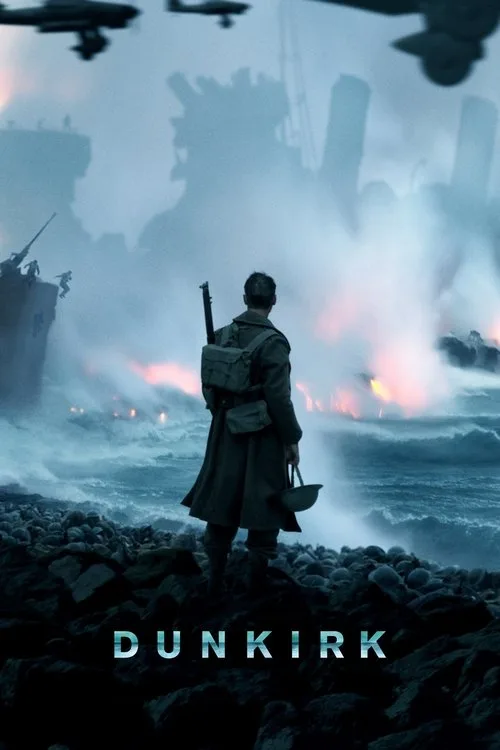
Dunkirk
War, Action · 1h 47m
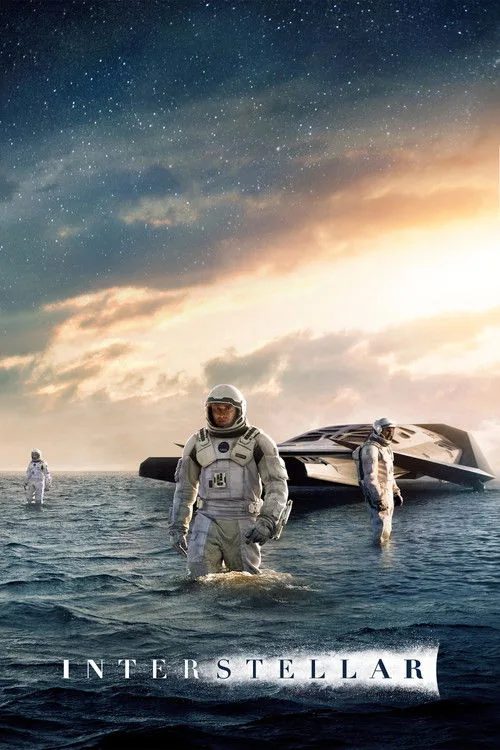 Featured
Interstellar
Adventure, Drama · 2h 49m
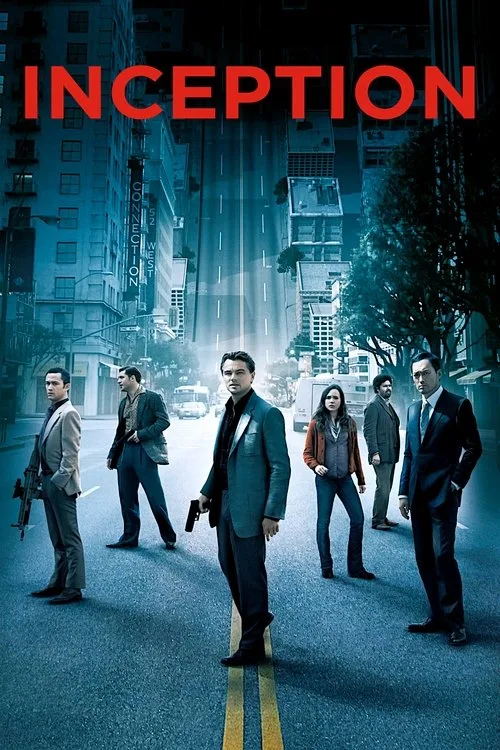
Inception
Action, Sci-Fi · 2h 28m