The Big Boss (1971) Review: A Star Held in Reserve
The Big Boss is Bruce Lee's first Hong Kong leading role, a rough, low-budget revenge thriller set in Thailand that comes alive whenever he finally fights.
★★★½☆ 3.5/5
Yes, with caveats. It is crude and slow to ignite, but essential for Bruce Lee fans and anyone tracing how the Hong Kong action boom began.
Is The Big Boss worth watching?
Yes, with caveats. The Big Boss is a rough, cheaply made thriller that becomes electrifying every time Bruce Lee is allowed to move, and as the film that made him a star it holds a secure place in action history. Lee’s speed and ferocity were unlike anything Hong Kong audiences had seen, and the film cleverly builds anticipation by holding him back. The trade-off is everything around him: a thin plot, clumsy supporting performances and a middle stretch that feels like marking time until the star is released.
What is The Big Boss about?
Cheng (Bruce Lee) is a young man from mainland China who travels to Thailand to live with his expatriate cousins and work alongside them at an ice factory. Before he leaves home, he makes a promise to his family never to get into fights, and he keeps a pendant as a reminder of the vow. The job looks like honest labour, but when some of his cousins start disappearing after crossing the factory’s management, Cheng is caught between his promise and a mystery that points toward the man at the top, the Big Boss of the title.
The Big Boss was directed by Lo Wei. It is a Hong Kong production shot on location in Thailand, released in Mandarin, and it runs 99 minutes. James Tien and Maria Yi co-star, with Han Ying-chieh as the factory boss and Nora Miao in a small role.
The long wait for Bruce Lee
The film’s most distinctive choice, whether by design or by accident of production, is how long it keeps its star on the sidelines. For a good portion of the running time, Cheng watches while others fight, and the early brawls belong largely to James Tien’s cousin. Cheng’s restraint becomes the film’s main source of tension: the audience knows what he can do before the characters do, and every provocation he swallows makes the eventual release more satisfying.
When Lee finally fights, the difference is startling. His movement is compact, explosive and precise, his kicks snap rather than swing, and his face carries an intensity that turns even simple exchanges into events. The staging around him is basic, with conventional coverage and little flair from the camera, but Lee’s presence overrides the limitations. It is easy to see why this was the film that launched him.
Rough edges everywhere else
The Big Boss was a modest production, and it shows. The factory and town settings are sparse, the sound effects are crude, and many of the supporting fighters are visibly slower than their star, which blunts the credibility of the threat. Lo Wei’s direction is serviceable rather than inspired; scenes of family life and romance with Maria Yi’s character are flat, and the pacing between fights can drift.
The tone is also uneven. Stretches of light comedy and melodrama sit beside moments of startling brutality, and the film’s attitude to the women in its story, including a brothel subplot, has dated badly. Viewers expecting the polish of Lee’s later work will find a rawer, more primitive film.
Why it still matters
For all that, The Big Boss has a vitality that more accomplished films lack. There is no mythology yet around Lee here, no philosophy speeches or carefully constructed persona, just a young performer revealing a new kind of screen physicality. The working-class setting, with its exploited labourers and corrupt management, also gives the revenge story a grounding in injustice that his later films would build on. Watching it now is like seeing the first draft of a legend, with all the charm and roughness that implies.
Who should watch The Big Boss?
It is required viewing for Bruce Lee fans and a worthwhile history lesson for anyone interested in classic action cinema from Hong Kong. Newcomers to Lee might start with one of his more polished films and come back to this one. At 99 minutes it is short, but the violence can be sudden and bloody, and there is some sexual content, so it is best suited to adults and older teenagers.
Where to go next:
- Fist of Fury, Lee’s next film with Lo Wei, which is angrier, more assured and gives him a far stronger character.
- The Way of the Dragon, which Lee directed himself and which shows how quickly he took control of his screen image.
- The 36th Chamber of Shaolin, a later Hong Kong classic that trades Lee’s raw power for a meticulous study of training.
The verdict
The Big Boss is a clumsy film with an extraordinary performer at its centre, and the second fact matters more than the first. Its plot is thin and its production is threadbare, but the sight of Bruce Lee breaking loose for the first time as a leading man remains thrilling half a century later.
Rating: 3.5/5
Availability is a catalogue snapshot and can change. Confirm with the provider in your region.
Where to watch The Big Boss
Streaming: WeTV
Rent: Amazon Video, Apple TV, Google Play, YouTube, Fandango at Home
Buy: Amazon Video, Apple TV, Google Play, YouTube, Fandango at Home
By region: WeTV in the United States; WeTV in Indonesia; WeTV in India; Wavve, TVING, WeTV in South Korea
Full scores and availability on the movie page.
If you liked The Big Boss
Ranked by genre overlap and Celluloid Score. More movies like The Big Boss →
 FeaturedTribeca 2022
Everything Everywhere All at Once
Action, Adventure · 2h 20m
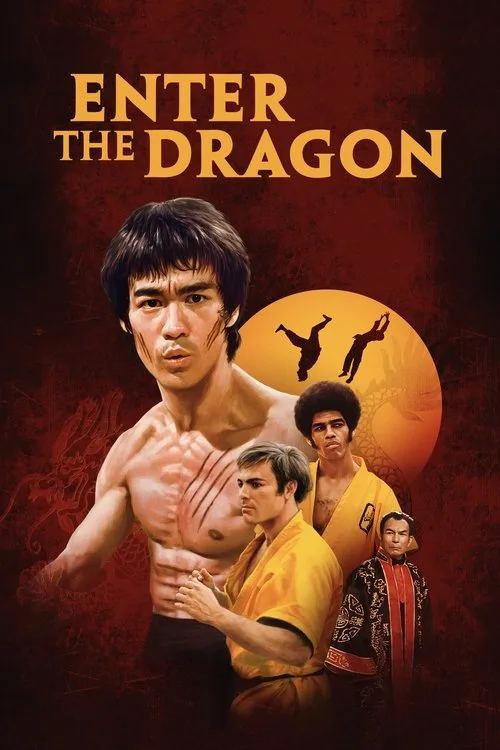
Enter the Dragon
Action · 1h 42m
 Featured
Batman Begins
Drama, Crime · 2h 20m
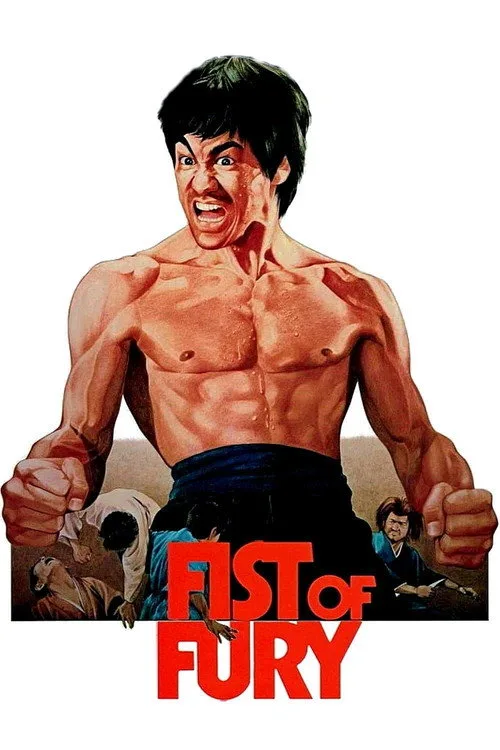
Fist of Fury
Drama, Action · 1h 48m
Where can I watch The Big Boss?
Streaming: WeTV. Rent: Amazon Video, Apple TV, Google Play, YouTube, Fandango at Home. Buy: Amazon Video, Apple TV, Google Play, YouTube, Fandango at Home. Regional notes: WeTV in the United States; WeTV in Indonesia; WeTV in India; Wavve, TVING, WeTV in South Korea.