Move to Heaven (2021) Review: Grief, Packed With Care
Move to Heaven follows two trauma cleaners sorting the belongings of people who died alone, a 10-episode Korean drama that turns each case into a small elegy.
★★★★½ 4.5/5
Yes. It is one of the most moving Korean dramas of its decade, best for viewers ready for a gentle but tearful series about death, family and dignity.
Is Move to Heaven worth watching?
Yes. Move to Heaven is a short, beautifully judged Korean drama that finds tenderness in the aftermath of lonely deaths, and it is likely to leave you in tears more than once. Its great strength is respect: each case treats the dead as people with full, complicated lives rather than as sad props. The reservation is a crime-tinged subplot around the uncle’s past, which feels imported from a louder show and occasionally pulls against the quiet power of the rest.
What is Move to Heaven about?
Han Geu-ru, a young man on the autism spectrum, works alongside his father as a trauma cleaner. Their small business empties the rooms of people who died alone, and they deliver one carefully packed box of belongings to whoever is left behind. When his father dies, guardianship of Geu-ru falls to Cho Sang-gu, his uncle, an ex-fighter with debts, a short temper and no wish to take on either a nephew or a job cleaning up after the dead.
Each call the pair take reconstructs a stranger’s final months from what was left on the floor, and slowly rebuilds the two of them in the process. Move to Heaven is a South Korean series in Korean, written by Yoon Ji-ryeon, with Tang Jun-sang as Geu-ru, Lee Je-hoon as Sang-gu and Hong Seung-hee as Na-mu, the neighbour who looks out for Geu-ru. This review covers the complete series: one season of 10 episodes, with a finished story.
Tang Jun-sang’s precise, unsentimental lead
A drama like this could easily turn its autistic lead into a symbol or a plot device. Tang Jun-sang avoids both. His Geu-ru is specific in his routines, his discomfort with noise and touch, and his unwavering belief in doing a job properly. The performance is rigorous without becoming a set of tics, and the writing lets Geu-ru be right about people more often than the adults around him expect.
Some viewers will find the character’s remarkable memory a familiar screen shorthand for autism. Tang’s steadiness mostly carries it, and the show never asks the audience to laugh at him.
Lee Je-hoon supplies the friction. Sang-gu starts out abrasive, selfish and plainly unsuited to caring for anyone, and Lee lets him soften at a believable pace. The mismatched pair form the emotional arc of the season, and the scenes where Sang-gu begins to take the work seriously are among its best.
Each case is a short story about a life
The episodic structure is the show’s master stroke. Every job opens on an empty room, then pieces together a person from notebooks, photographs, unsent letters and the evidence of habits. The cases take in loneliness among the elderly, workplace deaths, abuse and a same-sex couple kept apart by family and law, each handled with notable care for the social causes behind them.
The recurring ritual of the yellow box turns the premise into something close to a sacrament. Rather than dwelling on the grim physical side of trauma cleaning, the series focuses on what happens next: a relative receiving a box they did not expect, and a life being acknowledged at last. It is a simple device, and it works almost every time.
Where the melodrama gets louder
The weaker thread belongs to Sang-gu’s backstory. His debts and his history in underground fighting bring in a subplot of threats and confrontations that feels borrowed from a more conventional thriller, and it sits awkwardly beside the gentle cases. The score also leans hard on emotional cues at moments that would land without the push. Neither flaw is fatal, but the series is at its best when it trusts silence.
Who should watch Move to Heaven?
This is for viewers who value character-driven drama and do not mind crying. At 10 episodes of roughly an hour, it is a manageable binge, though many will want to space the cases out. It deals directly with death, suicide, abuse and violence, so it is not a light watch, even though its tone is ultimately consoling. It is available on Netflix.
If it moves you, try these next:
- My Mister, for another Korean drama about wounded people finding decency in each other.
- Extraordinary Attorney Woo, a warmer, case-based series with an autistic lead, told with more comedy.
- Hospital Playlist, for a humane ensemble that also sits close to death without despair.
The verdict
Move to Heaven is a compact, deeply felt drama that turns a grim profession into a meditation on how people are remembered. The uncle’s thriller-style subplot is its one real misstep, but Tang Jun-sang’s exacting lead performance and a run of beautifully written cases make it one of the finest Korean series on Netflix.
Rating: 4.5/5
Availability is a catalogue snapshot and can change. Confirm with the provider in your region.
Where to watch Move to Heaven
Streaming: Netflix
By region: Netflix in the United States; Netflix in the United Kingdom; Netflix in Indonesia; Netflix in India
Full scores and availability on the series page.
More like Move to Heaven
 Netflix Editor's Pick
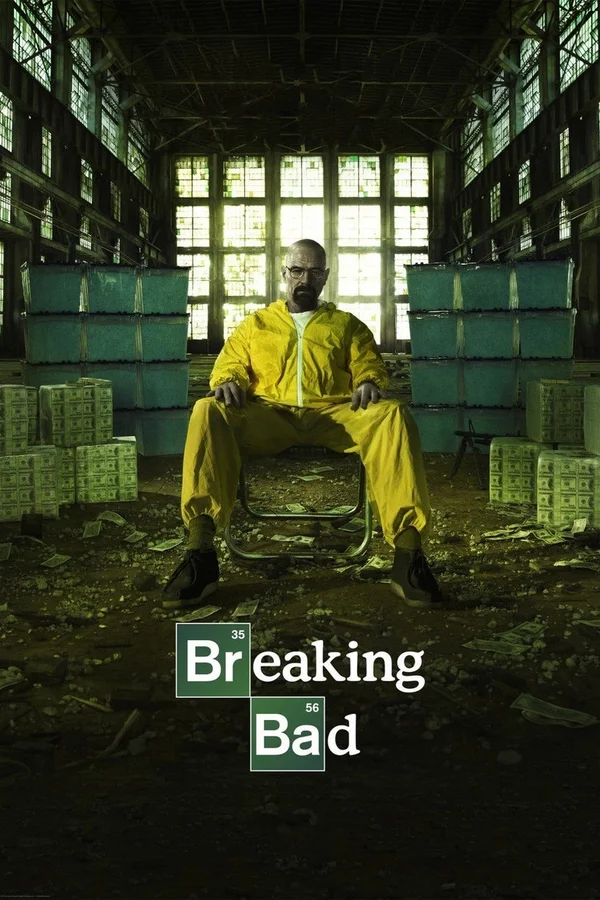
Breaking Bad
Crime, Drama
 Netflix Editor's Pick
My Mister
Drama
 Netflix Editor's Pick
When Life Gives You Tangerines
Drama, Romance
 Netflix
Arcane
Animation, Action
Where can I watch Move to Heaven?
Streaming: Netflix. Regional notes: Netflix in the United States; Netflix in the United Kingdom; Netflix in Indonesia; Netflix in India.