Egg (2007) Review: The Slow Pull of Home
Egg is Semih Kaplanoğlu's quiet Turkish drama about a poet who returns home for his mother's funeral. Patient, beautiful and demanding, it rewards stillness.
★★★½☆ 3.5/5
Yes, with reservations. It is a rewarding slow drama for fans of contemplative art cinema, but its silences and minimal plot will frustrate viewers who want momentum.
Is Egg worth watching?
Yes, for the patient. Egg is a restrained, carefully observed Turkish drama about grief and homecoming, and its quiet images linger long after the film ends. Semih Kaplanoğlu tells the story almost entirely through faces, landscapes and silences, and Nejat İşler’s withdrawn lead performance suits that approach well. The reservation is how much the film withholds: its emotions stay mostly beneath the surface, and viewers not attuned to slow cinema may find it opaque rather than profound.
What is Egg about?
Yusuf (Nejat İşler), a poet in his late thirties, returns to the small town where he grew up after the death of his mother. He has not been back for years. The family house is neglected and crumbling, and waiting there is Ayla (Saadet Işıl Aksoy), a young woman and distant relative who, he learns, had been living with his mother for the past five years. He had no idea she existed.
Yusuf means to settle his affairs and leave quickly, but Ayla tells him his mother left a promise unfulfilled, and the obligation keeps him in town longer than he planned. Egg is directed by Semih Kaplanoğlu, in Turkish, and runs 97 minutes. It won the Golden Orange for Best Film at the 2007 Antalya Film Festival, and it is the first part of his Yusuf Trilogy, followed by Milk and Honey.
A homecoming told in silences
Kaplanoğlu builds the film from long, static takes and very little dialogue. Yusuf wanders through rooms full of his mother’s belongings and walks the streets he left behind, while the camera simply observes him. There is no conventional score to tell the audience what to feel; instead, ambient sound fills the spaces between words.
The effect is closer to meditation than to storytelling. Grief here is not a matter of big scenes but of small, unspoken recognitions, and the film trusts the viewer to notice them. When it works, the stillness becomes almost hypnotic, and a simple gesture carries more weight than a speech ever could.
Two performances built on restraint
Nejat İşler plays Yusuf as a man who has shut himself off, not only from his hometown but from feeling itself. It is a deliberately closed performance, communicated through posture and hesitation, and it makes the small shifts in his behaviour all the more striking as the film goes on.
Saadet Işıl Aksoy is the film’s warmth. Ayla knew Yusuf’s mother in a way he never allowed himself to, and Aksoy gives her a quiet, practical steadiness that gradually unsettles him. The tentative connection between the two, undefined and never rushed, is the delicate thread that holds the film together.
Where the restraint becomes a wall
The same qualities that make Egg distinctive also limit it. Kaplanoğlu offers almost no backstory, so the reasons for Yusuf’s long absence and his relationship with his mother remain largely unexplained. Some viewers will find that ambiguity rich; others will feel held at arm’s length. The pacing is also genuinely slow, even by the standards of art cinema, and there are stretches where the film’s patience tips into inertia.
It also plays differently as part of a trilogy. Seen alone, Egg can feel incomplete, a portrait of a man whose inner life is only glimpsed. Its full resonance comes into focus alongside the later films that trace Yusuf back to his youth and childhood.
Who should watch Egg?
It is best for viewers who enjoy contemplative drama, long takes and films that leave space for interpretation, and for anyone interested in the Turkish art cinema of the 2000s. At 97 minutes it is not long, but it demands full attention; this is not background viewing. The content is gentle, centred on death and mourning, with nothing graphic.
If its pace and mood appeal, try these:
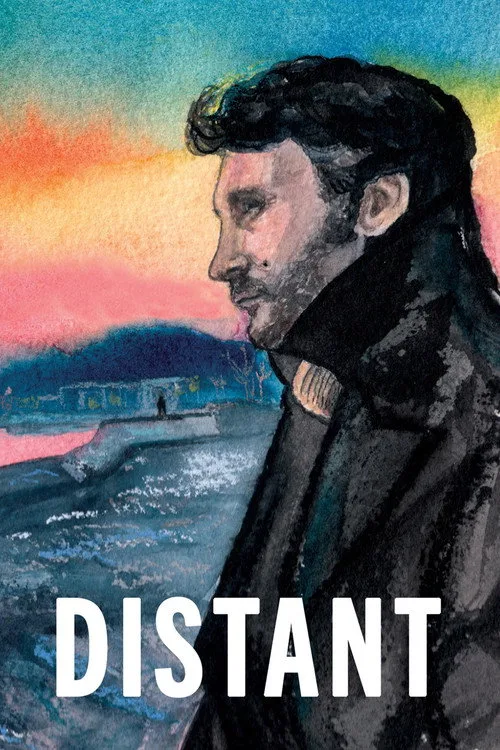
- Distant, Nuri Bilge Ceylan’s austere study of loneliness that shares Egg’s quiet, observational style.
- Once Upon a Time in Anatolia, a longer, richer Turkish drama that finds depth in stillness and small talk.
- Winter Sleep, another portrait of an intellectual man at odds with the people around him.
The verdict
Egg is a beautiful, rigorously restrained film about grief, obligation and the pull of the place you came from. Its silences and deliberate pace will not suit everyone, and it feels most complete as part of the trilogy, but its images and two finely judged performances make it worth the patience it asks for.
Rating: 3.5/5
If you liked Egg
Ranked by genre overlap and Celluloid Score. More movies like Egg →
 FeaturedAntalya 2002
Distant
Drama · 1h 46m
 FeaturedAntalya 2021
Brother's Keeper
Drama · 1h 25m
 Antalya 2008
Three Monkeys
Drama, Thriller · 1h 49m
 FeaturedAntalya 2004
Toss-Up
Drama · 1h 42m