The Rings of Power (2022) Review: Grand Vistas, Thin Story
The Rings of Power is Prime Video's Second Age Tolkien prequel, a visually lavish fantasy epic whose sprawling cast and stately pacing keep it from true greatness.
★★★½☆ 3.5/5
Mostly yes, for Middle-earth fans who want to spend time in Tolkien's world at a luxurious scale. Viewers who need tight plotting and brisk pacing may drift away.
Is The Rings of Power worth watching?
Mostly yes. The Lord of the Rings: The Rings of Power is a ravishing return to Middle-earth that looks every bit as expensive as its reputation, even if its storytelling rarely matches its scenery. The reason to watch is immersion: the landscapes, kingdoms and music make Tolkien’s world feel vast and lived in. The reservation is that the writing spreads itself across too many storylines, and the pacing can be slow and ceremonial when it should be urgent.
What is The Rings of Power about?
The series is set in the Second Age, thousands of years before the events of The Lord of the Rings, in a time of apparent peace. Galadriel (Morfydd Clark), a fierce elf commander, is convinced that the dark forces defeated long ago are gathering again, though few will listen. Elrond (Robert Aramayo) works with the elven smith Celebrimbor (Charles Edwards) and renews his friendship with the dwarf prince Durin (Owain Arthur) beneath the mountains. Elsewhere, a wandering Harfoot girl, Nori (Markella Kavenagh), finds a mysterious stranger (Daniel Weyman) who has fallen from the sky, and the island kingdom of Númenor enters the story at the height of its power.
The Rings of Power was created by J.D. Payne and Patrick McKay, drawing on material from Tolkien’s The Lord of the Rings and its appendices. It is an American production in English, streaming on Prime Video. The series is ongoing; this review is based on its first two seasons, and later episodes could shift the judgement.
Middle-earth on the grandest canvas
Few television series have ever looked like this. The production design makes each culture distinct: the gleaming, sea-facing city of Númenor, the warm, cavernous halls of the dwarves, the pale elegance of the elves and the scrappy, earthy world of the Harfoots. Wide shots are composed like paintings, and the effects work is generally seamless. Bear McCreary’s score is one of the show’s great assets, supplying the emotional sweep that some scenes lack on the page.
When the series allows its characters to breathe, it can be genuinely affecting. The friendship between Elrond and Durin is its most successful thread, and Owain Arthur and Sophia Nomvete, as Durin and his wife Disa, bring humour and warmth to the dwarven scenes. Their domestic moments feel like Tolkien’s spirit more than any battle.
A heroine with iron in her
Morfydd Clark plays Galadriel as a warrior consumed by a long grief, a bold choice that departs from the serene figure many viewers know from the films. It gives the character an edge, and Clark commits to it fully, though the writing sometimes leaves her merely stubborn rather than complicated. Robert Aramayo makes Elrond a thoughtful, diplomatic counterweight, and Charles Edwards gives Celebrimbor an artist’s pride that suits the show’s central theme of craft and temptation.
The Harfoot storyline, meanwhile, aims for the gentle charm of the Shire and partly succeeds, but it moves at a separate, slower rhythm from the political drama elsewhere.
Too many threads, too little momentum
The main problem is structural. Several storylines run in parallel, and the series often cuts between them before any has built real tension. Dialogue tends towards the solemn and aphoristic, which suits prophecy but makes ordinary conversations feel stiff. The show also compresses Tolkien’s long history into a much tighter timeline, a necessary choice for television that nonetheless bothers purists. The second season is more focused and darker, but the fundamental unevenness remains.
Who should watch The Rings of Power?
It is best for viewers who love Middle-earth and are happy to spend long hours there for the atmosphere, design and music alone. Newcomers can follow it without having read the books, though knowing the films helps. Each season runs eight episodes of around an hour, so it is a considerable commitment. There is battle violence and some frightening imagery, but little gore, making it suitable for most teenagers.
Other fantasy series worth a look:
- The Witcher, a grittier, more sardonic fantasy with a stronger central lead.
- Shadow and Bone, for a younger-skewing fantasy with its own chosen-heroine story.
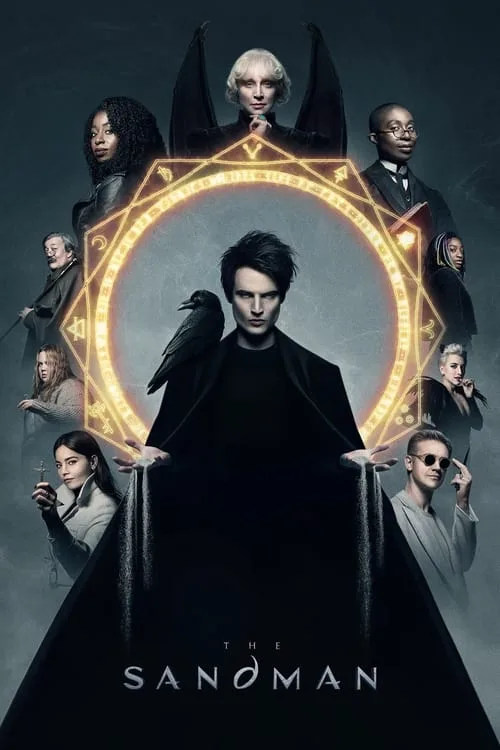
- The Sandman, another lavish adaptation of a much-loved literary universe.
The verdict
The Rings of Power is one of the most beautiful fantasy series ever made, and for Middle-earth devotees that is often enough. Its plotting is scattered and its pace stately, but strong design, a sweeping score and a few well-drawn friendships make it a worthwhile, if imperfect, journey back to Tolkien’s world.
Rating: 3.5/5
Availability is a catalogue snapshot and can change. Confirm with the provider in your region.
Where to watch The Lord of the Rings: The Rings of Power
Streaming: Prime Video
By region: Prime Video in the United States; Prime Video in the United Kingdom; Prime Video in Indonesia; Prime Video in India
Full scores and availability on the series page.
Guides for The Lord of the Rings: The Rings of Power
More like The Lord of the Rings: The Rings of Power
 Prime Video
The Family Man
Action, Drama
 Disney+
Moving
Action, Drama
 HBO Max
House of the Dragon
Fantasy, Drama
 Netflix
The Sandman
Fantasy, Drama
Where can I watch The Lord of the Rings: The Rings of Power?
Streaming: Prime Video. Regional notes: Prime Video in the United States; Prime Video in the United Kingdom; Prime Video in Indonesia; Prime Video in India.