The Breakfast Club (1985) Review: Detention as Confession
The Breakfast Club is John Hughes's Saturday-detention comedy about five teenagers and their labels, still sharp and funny even where its attitudes have dated.
★★★★☆ 4/5
Yes. It remains the defining teen ensemble film, funny and surprisingly raw, though some of its 1980s attitudes and tidy resolutions have aged poorly.
Is The Breakfast Club worth watching?
Yes. The Breakfast Club is still the benchmark teen ensemble film, a single-location comedy that becomes a surprisingly honest drama about how teenagers get sorted into categories and how much those categories hurt. John Hughes gives five young actors room to be funny, cruel and exposed within a single day, and the best of it still feels true four decades later. The reservations are real, though: some of its humour, especially around consent, has aged badly, and its final movements tie things up more neatly than the rest of the film has earned.
What is The Breakfast Club about?
On a Saturday morning, five students arrive at their suburban Illinois high school to serve a full day of detention in the library. They have nothing in common except the punishment. Claire (Molly Ringwald) is the popular girl, Andrew (Emilio Estevez) the star athlete, Brian (Anthony Michael Hall) the anxious high achiever, Allison (Ally Sheedy) the silent outcast, and John Bender (Judd Nelson) the provocateur who seems determined to make the day as difficult as possible. Supervising them is Richard Vernon (Paul Gleason), a school administrator whose contempt for them is obvious, and their assignment is to write an essay about who they think they are.
What starts as sniping and boredom turns, over the course of the day, into arguments, confessions and something close to understanding.
The Breakfast Club was written and directed by John Hughes. It is an American film in English, and it runs a tight 98 minutes.
A stage play disguised as a teen comedy
The film’s structure is its boldest choice. Almost all of it happens in one room, with a handful of forays into corridors and offices, and Hughes trusts dialogue and performance to carry the drama. That confinement makes the day feel both endless and urgent: there is nowhere to hide, and the characters have to deal with each other.
Hughes’s ear for teenage speech is the other great asset. The banter moves quickly, with insults that are genuinely funny and sometimes genuinely wounding, and the film understands that teenagers often reveal themselves through attacks rather than admissions. The famous opening montage of the school at dawn, and the Simple Minds song that bookends the film, set a tone that is part wry, part sincere, and the film holds that balance for most of its running time.
Five performances that define a generation of teen cinema
The casting is close to perfect. Judd Nelson’s Bender is the engine of the film, abrasive and needling, and Nelson makes the aggression feel like a performance hiding something worse. Molly Ringwald gives Claire more self-awareness than the “princess” label suggests, and Anthony Michael Hall is funny and painfully earnest as Brian, whose fear of failure becomes one of the film’s quietest and most affecting threads.
Emilio Estevez brings unexpected depth to the jock, particularly when Andrew talks about his father, and Ally Sheedy plays Allison with a strange, watchful comedy that makes her the film’s wild card. Paul Gleason’s Vernon is a broad antagonist, but a late scene with John Kapelos’s janitor gives even him a flicker of doubt.
What has not aged well
Viewed today, some of Bender’s behaviour toward Claire, including a moment of sexual harassment the film plays for laughs and tension, is uncomfortable, and the film’s reluctance to reckon with it is a real flaw. The social categories are also drawn from a narrow, overwhelmingly white suburban world. And while the long confessional sequence in the second half is powerful, the resolutions that follow feel shaped by wish fulfilment rather than by the honesty of what came before.
None of this cancels the film’s achievement, but it does mean The Breakfast Club plays best when viewers bring some awareness of when and for whom it was made.
Who should watch The Breakfast Club?
It is essential for anyone interested in 1980s American comedy and in coming-of-age stories more generally, and it remains a good film for older teenagers and their parents to watch and argue about together. There is frequent strong language, drug use and sexual references, so it is not for younger children. At under 100 minutes, it is an easy evening.
Our catalogue’s closest companions come from other directions:
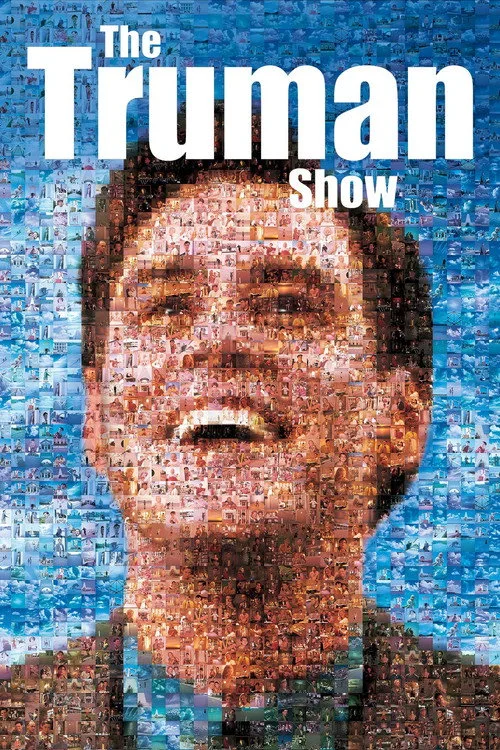
- The Truman Show, another comedy-drama about someone pushing against the role he has been assigned.
- Birdman, which also confines its characters to a single building and lets talk and performance build the pressure.
The verdict
The Breakfast Club is a flawed classic that still earns the label: funny, sharp and willing to take teenage pain seriously, carried by five performances that became iconic for good reason. Its dated moments and neat ending keep it from perfection, but few films have captured high school’s social cruelty and its hidden solidarity so vividly.
Rating: 4/5
Availability is a catalogue snapshot and can change. Confirm with the provider in your region.
Where to watch The Breakfast Club
Streaming: Hulu, YouTube TV
Rent: Amazon Video, Apple TV, Google Play, YouTube, Fandango at Home
Buy: Amazon Video, Apple TV, Google Play, YouTube, Fandango at Home
By region: Hulu, YouTube TV in the United States; Sky Cinema in the United Kingdom; Disney+ Hotstar in India
Full scores and availability on the movie page.
If you liked The Breakfast Club
Ranked by genre overlap and Celluloid Score. More movies like The Breakfast Club →
 Featured
The Truman Show
Comedy, Drama · 1h 43m
 FeaturedSundance 2025
Come See Me in the Good Light
Comedy, Drama · 1h 44m
 FeaturedShanghai 2018
Dying to Survive
Drama, Comedy · 1h 57m
 Venice 2016
La La Land
Comedy, Drama · 2h 9m
Where can I watch The Breakfast Club?
Streaming: Hulu, YouTube TV. Rent: Amazon Video, Apple TV, Google Play, YouTube, Fandango at Home. Buy: Amazon Video, Apple TV, Google Play, YouTube, Fandango at Home. Regional notes: Hulu, YouTube TV in the United States; Sky Cinema in the United Kingdom; Disney+ Hotstar in India.