Taste (2021) Review: A Fragile Utopia on the Margins
Taste is Lê Bảo's radical Vietnamese art film about a Nigerian footballer and four women who retreat into an old house, a striking but demanding sensory experiment.
★★★☆☆ 3/5
It depends. Adventurous art-house viewers will find its images and ideas haunting; anyone who needs story, dialogue or a conventional pace should give it a miss.
Is Taste worth watching?
It depends on your appetite for experimental cinema. Taste is a bold, visually arresting debut that tells its story almost entirely through bodies, spaces and rituals, and it rewards patient viewers with images that are hard to forget. Lê Bảo has a rigorous eye and a genuinely original sensibility. The reservation is that the film’s austerity and near-total refusal of conventional storytelling make it an endurance test for anyone not already inclined towards slow, formal art cinema.
What is Taste about?
Bassley (Olegunleko Ezekiel Gbenga) is a Nigerian footballer living in Vietnam who has been unable to earn a living since breaking his leg. He sometimes works for four middle-aged women (played by Khương Thị Minh Nga, Vũ Thị Thẩm Thìn, Lê Thị Dung and Nguyễn Thị Cẩm Xuân), and together the five decide to escape the disappointments of their daily lives. They retreat to an old house, where they create a strange, intimate world of their own, a private utopia that cannot last forever.
Taste is written and directed by Lê Bảo, making his feature debut. It is in Vietnamese, runs 97 minutes and was released in 2021. It was made as an international co-production with European and Asian partners, and it won the Golden Hanoman Award at the Jogja-NETPAC Asian Film Festival in 2021.
Bodies, rooms and ritual
The first thing viewers will notice is how little the film explains. There is minimal dialogue and no conventional plot; instead, Lê Bảo builds the film from long, carefully composed shots of the five characters performing everyday tasks, cooking, cleaning, eating, resting, inside their dilapidated refuge. Those routines gradually take on the weight of ritual, and the house becomes a world with its own rules.
The camera is mostly still, and the compositions are painterly and precise, often placing the figures within the worn textures and shadows of the house as if they were part of its architecture. The effect is both beautiful and claustrophobic, and it gives the film a hypnotic, slightly unreal atmosphere.
A film about the people cities forget
Beneath its formal austerity, Taste has a clear sympathy for people pushed to the margins. A migrant whose body has failed him and working women whose lives have narrowed are rarely at the centre of any cinema, and the film treats them with seriousness and dignity rather than pity. Their retreat reads as a quiet rejection of a society that has little use for them, and the fragile community they build carries real poignancy.
The performers, largely unfamiliar faces, are asked to communicate almost entirely through presence and movement, and they bring a striking naturalness to the film’s rigorously controlled frames.
Where the rigour becomes a wall
The film’s refusal to explain itself is both its strength and its biggest obstacle. Motivations remain opaque, the passage of time is hard to track, and the long, static takes can feel punishing rather than meditative. Viewers who value emotional connection with characters may find the film keeps them at a cool distance, admiring its images without feeling much for the people inside them.
Some of its symbolism also feels more cryptic than resonant, and at times the film seems more interested in its own formal rules than in the experience of its audience. It is a film easier to respect than to love.
Who should watch Taste?
It is best suited to dedicated art-house audiences, festival-goers and viewers interested in new Southeast Asian cinema, particularly those who enjoy slow, image-driven films with little dialogue. It is not a casual watch, despite its modest running time. The film features nudity and frank physicality, and its mood is sombre, so it is strictly for adults.
If its style appeals, consider these:
- Portrait of a Lady on Fire, for another story of people building a brief private world apart from society.
- Amour, Michael Haneke’s rigorous, confined study of bodies, care and domestic space.
- More from our drama shelf, for other challenging international films.
The verdict
Taste is an uncompromising, visually striking debut that treats marginalised lives with tenderness and formal daring. Its opacity and slowness will alienate many viewers, but for those willing to meet it on its own terms, it offers a strange and memorable vision of a community living outside society’s rules.
Rating: 3/5
Availability is a catalogue snapshot and can change. Confirm with the provider in your region.
Where to watch Taste
Streaming: MUBI
By region: MUBI in the United States; MUBI in the United Kingdom; MUBI in India; MUBI in Turkey
Full scores and availability on the movie page.
If you liked Taste
Ranked by genre overlap and Celluloid Score. More movies like Taste →
 FeaturedJAFF 2019
House of Hummingbird
Drama · 2h 15m
 FeaturedJAFF 2025
A Useful Ghost
Comedy, Drama · 2h 10m
 FeaturedJAFF 2017
The Seen and Unseen
Drama · 1h 26m
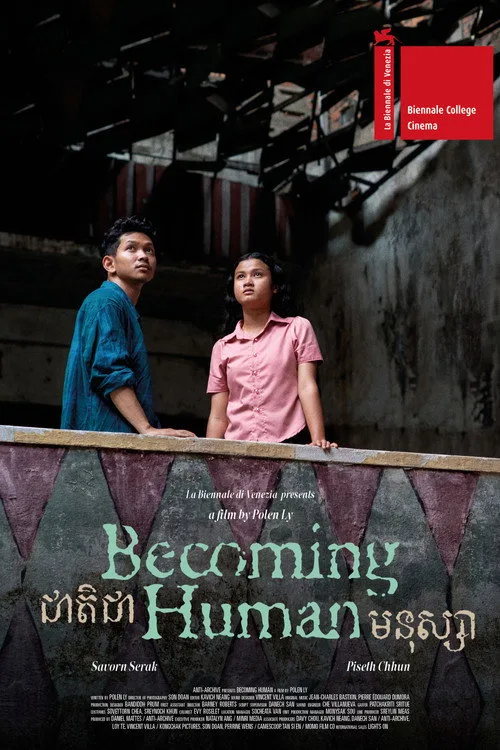 FeaturedJAFF 2025
Becoming Human
Fantasy, Drama · 1h 39m
Where can I watch Taste?
Streaming: MUBI. Regional notes: MUBI in the United States; MUBI in the United Kingdom; MUBI in India; MUBI in Turkey.