Skins (2007) Review: Bristol Teens, Three Generations
Skins is the Bristol teen drama that recast itself every two series. Its early generations are fearless and funny; the later run is patchier and louder.
★★★★☆ 4/5
Yes. The first four series are British teen drama at its boldest, and the dip afterwards is worth riding out if frank drug and sex content won't put you off.
Is Skins worth watching?
Yes. Skins remains the defining British teen drama of its era: reckless, funny and far more tender than its party-show reputation suggests, even though its quality swings each time the cast changes. The one-character-per-episode format lets it take people who look like stock teenagers and turn them inside out. The main reservation is consistency, because the later series reach for shock more often than insight, and the show’s candour about drugs, sex and mental illness will be too much for some viewers.
What is Skins about?
Skins follows a group of sixth-form friends in Bristol through parties, crushes, exams, family breakdowns and the gap between the freedom they want and the mess they are actually living in. Created by Bryan Elsley and Jamie Brittain, it premiered in 2007 on E4, the youth channel of Channel 4, and ran to seven series and 61 episodes before ending in 2013. It is a British series in English, mixing drama and comedy in roughly equal measure.
The structure is what makes it unusual. Rather than ageing one cast through years of storylines, Skins replaced its ensemble every two series, so it plays as three linked teen dramas followed by a short coda. Most episodes belong to a single character, re-running the group’s shared week through one person’s home life, secrets and blind spots. This review covers the complete run, including the final series of longer standalone stories that return to a few familiar faces as young adults.
A first generation that launched careers
The opening two series are still the best place to see what the show does well. Nicholas Hoult plays Tony Stonem as a smirking puppet-master whose charm is also a warning sign, and Mike Bailey gives his best friend Sid a hapless decency that anchors the comedy. Hannah Murray’s Cassie, dreamy and fragile, is the character people tend to remember longest, and her episodes show how gently the series could handle a subject such as an eating disorder. Dev Patel, Joe Dempsie and a young Kaya Scodelario as Tony’s silent younger sister Effy round out a cast that reads now like a roll call of future British stars.
What keeps these episodes fresh is the tone. The kids are treated with sympathy and the grown-ups as absurd, self-absorbed figures (Harry Enfield plays Tony’s exasperated father), which gives the show a distinctly teenage point of view. Scenes lurch from slapstick to real sorrow without apology, and the music choices do a lot of the emotional work.
The middle years find a sharper edge
The second generation, built around Effy as the link between casts, is rougher and more volatile. Jack O’Connell’s Cook is a feral, magnetic presence, and the relationship between Emily Fitch (Kathryn Prescott) and Naomi (Lily Loveless) became one of the most affectionately remembered queer romances on British television of the period, written with a patience the show does not always show elsewhere.
These series are also where Skins gets bolder with mental health, grief and violence. The results can be powerful, but the fourth series in particular pushes into melodrama that splits viewers. It is still gripping, only less sure of where the line between honesty and sensation should be drawn.
Where the formula wears thin
By the third generation, led by Dakota Blue Richards as the outsider Franky, the reset feels less like reinvention and more like repetition. The new characters are sketched in broader strokes, the adult roles slide further into caricature, and too many episodes hinge on escalation rather than observation. The closing series is more sombre and grown-up, which is admirable, but its standalone format sits oddly with a show that was always strongest as an ensemble.
Who should watch Skins?
Adults and older teenagers who like character-led drama with a comic streak will get the most from it. The content is frank throughout: heavy drinking and drug use, sex, self-harm, eating disorders, family abuse and bereavement all feature, and it carries adult ratings in several countries. Most episodes run under an hour, and each two-series generation works as a self-contained unit, so it is easy to stop after the first four series if the later ones do not grab you.
If it lands, three good companions:
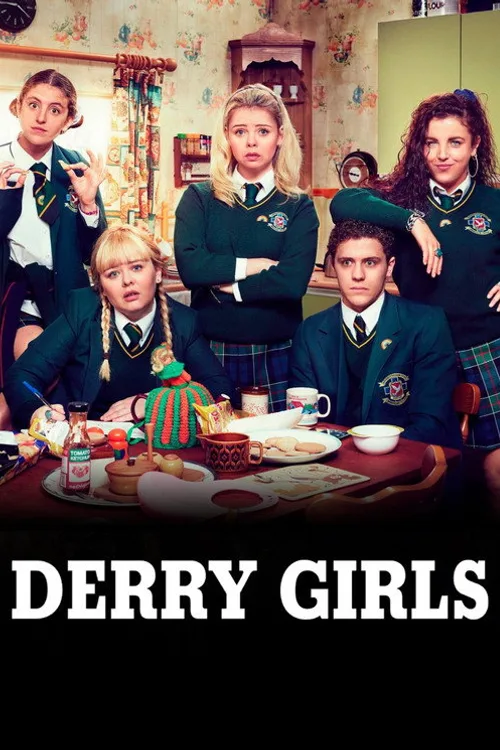
- Derry Girls, a warmer and funnier look at a gang of teenagers, set in 1990s Northern Ireland.
- Fleabag for the same mix of comedy, bad behaviour and sudden emotional depth, seen from adulthood.
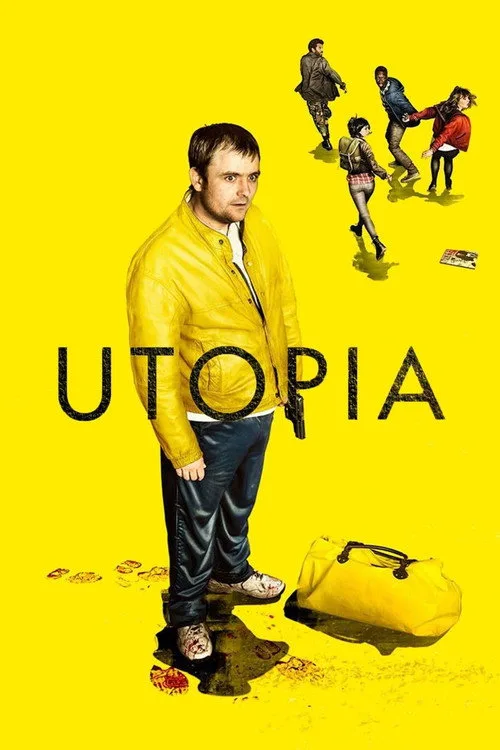
- Utopia, another Channel 4 series with an abrasive, unmistakable style that polarised audiences in its day.
The verdict
Skins is uneven by design, and the unevenness is part of the deal: a show that kept tearing itself up and starting again was always going to produce misfires alongside its best work. The first four series are essential viewing for fans of British television, and even the weaker stretches have moments no other teen drama would attempt.
Rating: 4/5
Availability is a catalogue snapshot and can change. Confirm with the provider in your region.
Where to watch Skins
Streaming: Hulu
By region: Hulu in the United States; Prime Video, Disney+, Sky Cinema in the United Kingdom; Prime Video in South Africa
Full scores and availability on the series page.
More like Skins
 Channel 4
Derry Girls
Comedy, Drama
 Channel 4
Misfits
Fantasy, Drama
 Channel 4
Utopia
Mystery, Drama
 Prime Video Editor's Pick
Fleabag
Comedy, Drama
Where can I watch Skins?
Streaming: Hulu. Regional notes: Hulu in the United States; Prime Video, Disney+, Sky Cinema in the United Kingdom; Prime Video in South Africa.