Perfect Days (2023) Review: Grace in a Tokyo Routine
Perfect Days is Wim Wenders's serene Tokyo drama about a public-toilet cleaner's daily rituals, anchored by Kōji Yakusho's Cannes-winning, near-wordless lead turn.
★★★★★ 5/5
Yes. It is a quietly profound film about attention and contentment, ideal for patient viewers who can let a slow, repetitive rhythm work on them.
Is Perfect Days worth watching?
Yes. Perfect Days is one of the most moving films of its decade, a portrait of an ordinary working life that turns repetition into something close to prayer. Wim Wenders builds the whole film from a handful of daily rituals and trusts Kōji Yakusho’s face to carry everything the dialogue leaves out. Its only real barrier is tempo: viewers who need plot momentum may find the first half-hour tests them before the film’s cumulative power arrives.
What is Perfect Days about?
Hirayama (Yakusho) cleans public toilets in Tokyo’s Shibuya district. His days follow a fixed pattern. He wakes before dawn, tends the seedlings he keeps in his small apartment, drives to work with a cassette in the van’s tape deck, eats lunch under the trees, photographs the light through the leaves on an old film camera, and reads paperbacks before sleep. He speaks very little. A talkative younger colleague, Takashi (Tokio Emoto), fills the silence for both of them.
The drama, such as it is, comes from small interruptions to that routine, several of them hinting at a family and a past Hirayama has chosen to step away from. The film never explains him fully, and it is better for that restraint.
Perfect Days is directed by Wenders, who wrote it with Takuma Takasaki. It is a Japanese-language film set and shot in Tokyo, it runs 124 minutes, and it was nominated for the Academy Award for Best International Feature Film.
Repetition as the film’s method
Most films treat routine as the thing a character must escape. Wenders treats it as a discipline. Because the audience sees the same actions again and again, tiny variations start to register with real force: a different song on the tape deck, a stranger at the lunch bench, a note left in a toilet cubicle. The structure teaches you how to watch, and by the midpoint the smallest change feels like an event.
The setting deserves credit too. The project grew out of Tokyo’s architect-designed public toilets, and Franz Lustig’s camera treats these small buildings, and the overpasses and back streets between them, with the same unhurried respect it gives Hirayama. The near-square frame keeps the focus tight on one man in one city. Brief black-and-white dream interludes, flickering like the leaf-shadows he photographs, give the film an inner life without ever spelling it out.
Kōji Yakusho says everything without speaking
Kōji Yakusho won Best Actor at Cannes for this role, and it is easy to see why. He has almost no dialogue to work with, so the performance lives in posture, timing and the eyes. Watch how he looks up at the trees each morning: contentment, curiosity and something sadder all register in the same glance.
Yakusho also avoids the obvious trap of making Hirayama a saint. There is stubbornness in the character, flashes of irritation, and a sense that his serenity has been paid for. Emoto’s cheerful, feckless Takashi is a well-judged contrast, and the younger cast members who pass through Hirayama’s orbit bring out a gentleness that the routine alone would not reveal.
The soundtrack is part of the characterisation. Hirayama’s cassettes are mostly 1960s and 1970s rock and soul, including the Lou Reed song that gives the film its title, and the music tells you what this quiet man values without a word of backstory.
A slow film that earns its patience
The honest caveat is pace. Perfect Days has no conventional plot engine, and its effect is cumulative rather than immediate. Viewers who come in expecting a story with clear turning points may feel the opening stretch is merely pleasant. The film asks for surrender to its rhythm, and it repays that trust generously.
Who should watch Perfect Days?
It suits anyone drawn to reflective, humane cinema, and anyone who has found meaning in a routine or a craft. It also works as a gentle entry point to Japanese drama for newcomers. There is nothing graphic here; the film touches lightly on estrangement and loneliness, and it is suitable for teenagers upward, though younger viewers may find it slow. Two hours in a quiet room is the ideal setting.
If it moves you, these make fine companions:
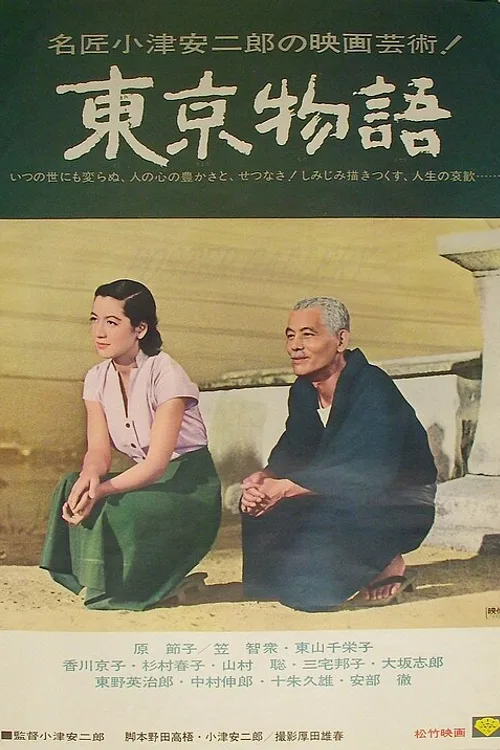
- Tokyo Story, Ozu’s masterpiece of everyday family life, a clear influence on Wenders’s gaze.
- Drive My Car, another patient Japanese drama about grief and routine, told largely in a car.
- Shoplifters, Kore-eda’s warm, bruising look at the families people choose.
The verdict
Perfect Days is a small film with a large heart, a study of how a life of modest labour and close attention can be a full one. Wenders directs with rare tact, and Yakusho gives a performance built from almost nothing that lingers long after the credits. It is serene, sad and quietly radiant.
Rating: 5/5
Availability is a catalogue snapshot and can change. Confirm with the provider in your region.
Where to watch Perfect Days
Not confirmed on major subscription platforms in our US baseline — check regional listings.
Rent: Amazon Video, Apple TV, Google Play, YouTube, Fandango at Home, Spectrum On Demand
Buy: Amazon Video, Apple TV, Google Play, YouTube, Fandango at Home
By region: MUBI in the United Kingdom; KlikFilm in Indonesia; MUBI in India; MUBI, TV+, HBO Max in Turkey
Full scores and availability on the movie page.
If you liked Perfect Days
Ranked by genre overlap and Celluloid Score. More movies like Perfect Days →


Where can I watch Perfect Days?
Rent: Amazon Video, Apple TV, Google Play, YouTube, Fandango at Home, Spectrum On Demand. Buy: Amazon Video, Apple TV, Google Play, YouTube, Fandango at Home. Regional notes: MUBI in the United Kingdom; KlikFilm in Indonesia; MUBI in India; MUBI, TV+, HBO Max in Turkey.