Grave of the Fireflies (1988) Review: Hunger After the Bombs
Grave of the Fireflies is Isao Takahata's animated war drama about two orphaned children in 1945 Kobe, and one of the most devastating films ever made.
★★★★½ 4.5/5
Yes, once. It is a masterpiece of animated drama and an essential war film, best for teens and adults ready for a profoundly sad, unsentimental story.
Is Grave of the Fireflies worth watching?
Yes. Grave of the Fireflies is one of the great films about war and one of the saddest films of any kind, an animated drama that shows the cost of conflict through two children rather than soldiers or battles. Isao Takahata’s quiet, observational style makes every small comfort and every loss land with enormous force. The only real caution is the one everyone gives: this is a harrowing experience, and many viewers find it hard to watch twice.
What is Grave of the Fireflies about?
In the last months of the Second World War, 14-year-old Seita and his little sister, Setsuko, lose their mother when American firebombing strikes their home city of Kobe. Their father is away with the navy. The children go to stay with an aunt, but tensions over food and their place in her household grow, and Seita eventually decides the two of them will live alone in an abandoned bomb shelter by a pond.
From there the film becomes a story about survival in its most basic form: finding rice, keeping a small child fed and entertained, and holding on to a sense of family while the adult world stops helping. The film makes no secret, from its opening minutes, that this will not be a story of rescue.
Grave of the Fireflies was written and directed by Takahata for Studio Ghibli, adapted from Akiyuki Nosaka’s semi-autobiographical short story. It is a Japanese film in Japanese, with Tsutomu Tatsumi voicing Seita and Ayano Shiraishi as Setsuko, and it runs a compact 89 minutes.
Animation used for realism, not fantasy
Takahata was the Ghibli director most committed to the everyday, and here he uses animation to render ordinary life with painful precision. The film lingers on Setsuko playing with pebbles, the ritual of opening a tin of fruit drops, the fireflies the children catch to light the shelter. These details are what make the story so hard to bear; the film builds a child’s world out of small things and then shows how fragile it is.
The air raids are depicted with terrifying clarity, but the most frightening images are quieter: empty cupboards, adults who look away, a city that has no place left for two children. By avoiding battle scenes almost entirely, Takahata makes war feel like weather, something that falls on civilians without explanation.
Two voices that feel startlingly real
Ayano Shiraishi, who was a young child when she recorded Setsuko, gives the character a naturalness that many adult voice actors could not fake: her chatter, tantrums and delight sound like a real four-year-old. Tatsumi’s Seita is proud, protective and, crucially, still a boy himself, making choices that a more experienced adult might not.
The film is careful not to make him a simple hero. Takahata lets viewers see both his devotion to his sister and the stubbornness that shapes his choices, and it is this moral complexity, rather than tragedy alone, that has kept critics and audiences arguing about the film for decades.
Where its power becomes a barrier
The film’s greatest strength is also what limits its reach. Its grief is unrelenting, and there is little of the wonder or humour that audiences associate with Studio Ghibli, so anyone expecting a companion piece to the studio’s fantasy films will be caught off guard. The wider historical context is kept deliberately vague, which intensifies the children’s isolation but leaves some viewers wanting more sense of the world around them. And the late-1980s animation, while beautiful in its restraint, is plainer than the lush style of later Ghibli films.
Who should watch Grave of the Fireflies?
It is essential for anyone interested in animation, Japanese cinema or films about war, and it is a powerful choice for classroom or family discussion with teenagers. It is not a film for young children, despite being animated: it depicts bombing, burns, starvation and bereavement. Set aside time afterwards; few people want to go straight to something else.
If it moves you, three thoughtful follow-ups:
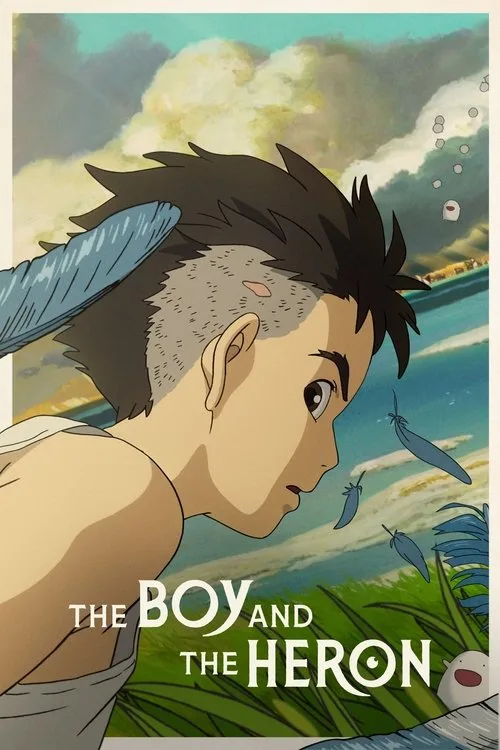
- The Boy and the Heron, Hayao Miyazaki’s wartime story of a grieving boy, which approaches loss through fantasy rather than realism.
- Look Back, a short, intensely emotional anime about friendship and grief.
- Tokyo Story, Ozu’s gentle post-war classic about families failing to care for their own.
The verdict
Grave of the Fireflies is a small film that carries an immense weight, a story of two children that says more about the human cost of war than most epics manage. It is difficult to recommend lightly and impossible to forget, and its restraint is exactly what makes it unbearable. Watch it when you are ready for it.
Rating: 4.5/5
Availability is a catalogue snapshot and can change. Confirm with the provider in your region.
Where to watch Grave of the Fireflies
Streaming: Netflix
Rent: Amazon Video
Buy: Amazon Video
By region: Netflix in the United States; Netflix in the United Kingdom; Netflix in Indonesia; Netflix in India
Full scores and availability on the movie page.
If you liked Grave of the Fireflies
Ranked by genre overlap and Celluloid Score. More movies like Grave of the Fireflies →
 TIFF 2023
The Boy and the Heron
Animation, Fantasy · 2h 4m

Das Boot
War, Drama · 2h 29m
 Featured
Schindler's List
Drama, History · 3h 15m
 Cannes 2002
The Pianist
Drama, War · 2h 30m
Where can I watch Grave of the Fireflies?
Streaming: Netflix. Rent: Amazon Video. Buy: Amazon Video. Regional notes: Netflix in the United States; Netflix in the United Kingdom; Netflix in Indonesia; Netflix in India.