Gladiator (2000) Review: Revenge Staged as Spectacle
Gladiator is Ridley Scott's thunderous Roman revenge epic, with Russell Crowe as a betrayed general turned arena fighter, and it still sets the genre's standard.
★★★★½ 4.5/5
Yes. It is a rousing, old-fashioned epic with modern muscle, perfect for anyone who wants grand spectacle and a simple, powerful revenge story told with total conviction.
Is Gladiator worth watching?
Yes. Gladiator is one of the great modern Hollywood epics, a revenge story of almost mythic simplicity that Ridley Scott stages with overwhelming force, and Russell Crowe makes Maximus an instantly iconic hero. It revived the sword-and-sandal genre for a new generation, and its arena battles still thrill. The reservations are minor next to its achievements: some dated digital effects, choppy battle editing and a looseness with history that purists will notice.
What is Gladiator about?
Gladiator opens on the frozen frontier of the Roman Empire, where General Maximus Decimus Meridius (Russell Crowe) leads his legions to victory against Germanic tribes. The ageing emperor Marcus Aurelius (Richard Harris) trusts Maximus more than anyone, including his own son Commodus (Joaquin Phoenix), and hopes the general can help steer Rome towards a better future.
When Marcus dies, Commodus seizes power and turns on Maximus, who loses his rank, his freedom and far more besides. Sold into slavery, he is trained as a gladiator under the wily Proximo (Oliver Reed) and fights his way through provincial arenas towards Rome itself, where the Colosseum offers him a stage and, possibly, a path to revenge. Connie Nielsen plays Lucilla, Commodus’s sister and Maximus’s former love, and Derek Jacobi and Djimon Hounsou round out a strong supporting cast.
Ridley Scott directs this English-language epic, a British-American production that runs 155 minutes. It won the Academy Award for Best Picture, and Crowe won Best Actor.
Ridley Scott’s spectacle with weight
Scott’s gift for world-building is on full display. The opening battle in the forests of Germania is a startling burst of mud, fire and chaos, and the recreation of Rome, with its crowds, marble and politics, has real scale. The arena sequences are the film’s heart, and Scott stages them as both thrilling action and pointed commentary on a society that turns violence into entertainment.
The film also knows when to slow down. Recurring images of wheat fields and a distant home give Maximus’s journey an elegiac, almost spiritual quality, and Hans Zimmer and Lisa Gerrard’s score, with its soaring themes and mournful vocals, amplifies that sense of loss. Few action films are this interested in grief.
Crowe and Phoenix as hero and villain
Crowe’s performance is a lesson in screen presence. He plays Maximus with restraint, letting fury and sorrow simmer beneath a soldier’s composure, and when he finally speaks to the crowd, the effect is electric. It is a movie-star turn in the classic mould, closer to the stoic heroes of old Hollywood than to modern action stars.
Joaquin Phoenix makes Commodus one of the most memorable villains of the era: petulant, needy, dangerous and pitiful at once. His hunger for his father’s love and the public’s adoration gives the film its psychological edge. Oliver Reed brings gruff charisma to Proximo, and Richard Harris lends the dying emperor genuine gravity.
Where the epic shows its age
Some of the digital effects, particularly the wide shots of Rome, look dated today, and Scott’s choice to shoot combat with jittery, fragmented editing can make it hard to follow the action. The dialogue occasionally lurches into grand pronouncements, and the political subplot involving the Senate is thinner than the arena drama. Historians will also note how freely the film treats the real Commodus and the Roman world. None of this seriously dents its power.
Who should watch Gladiator?
Fans of historical epics and action cinema should consider it a cornerstone, and it is a strong choice for anyone who likes a clear, emotionally direct story on a grand scale. Set aside more than two and a half hours. The violence is frequent and bloody, with brutal battle scenes, arena combat and executions, so it is best for older teenagers and adults.
Where to go next:
- Gladiator II, Scott’s belated sequel, which returns to the arena a generation later.
- Dunkirk, another large-scale historical film that puts audiences inside the chaos of battle, though with a very different, near-wordless approach.
The verdict
Gladiator is a towering popular epic: emotionally direct, visually commanding and anchored by two superb performances. Dated effects and historical liberties are small blemishes on a film that remains the benchmark for the modern sword-and-sandal genre.
Rating: 4.5/5
Availability is a catalogue snapshot and can change. Confirm with the provider in your region.
Where to watch Gladiator
Streaming: Netflix, Paramount+, Kanopy, YouTube TV
Rent: Amazon Video, Apple TV, Google Play, YouTube, Fandango at Home, Spectrum On Demand
Buy: Amazon Video, Apple TV, Google Play, YouTube, Fandango at Home
By region: Netflix, Paramount+, Kanopy in the United States; Prime Video in the United Kingdom; Prime Video, Catchplay in Indonesia; Prime Video in India
Full scores and availability on the movie page.
If you liked Gladiator
Ranked by genre overlap and Celluloid Score. More movies like Gladiator →
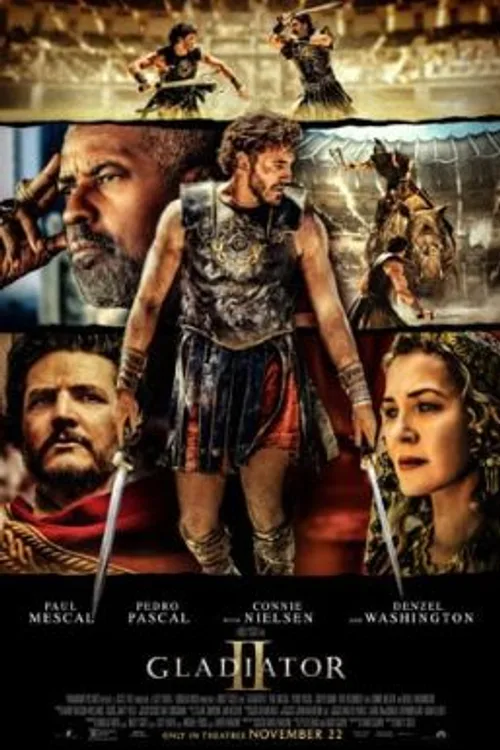 BFI London 2024
Gladiator II
Action, Adventure · 2h 28m
 Cannes 2006
The Wind That Shakes the Barley
Drama, War · 2h 7m
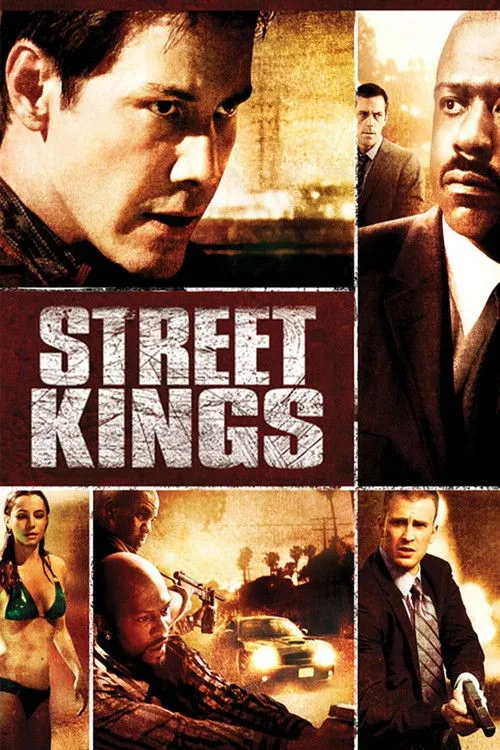
Street Kings
Action, Crime · 1h 49m
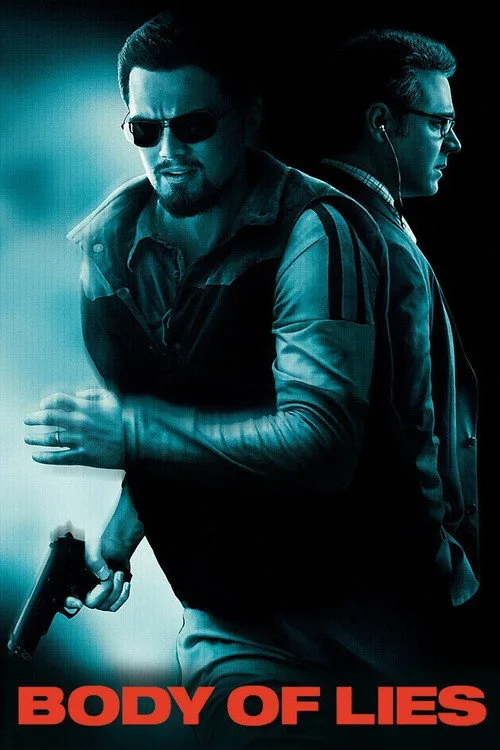
Body of Lies
Action, Drama · 2h 8m
Where can I watch Gladiator?
Streaming: Netflix, Paramount+, Kanopy, YouTube TV. Rent: Amazon Video, Apple TV, Google Play, YouTube, Fandango at Home, Spectrum On Demand. Buy: Amazon Video, Apple TV, Google Play, YouTube, Fandango at Home. Regional notes: Netflix, Paramount+, Kanopy in the United States; Prime Video in the United Kingdom; Prime Video, Catchplay in Indonesia; Prime Video in India.