Doctor Who (2005) Review: Reinvention as a Superpower
Doctor Who's 2005–2021 revival is British TV's great shape-shifter: a time-travel adventure that swaps its lead, tone and team every few years and mostly thrives.
★★★★½ 4.5/5
Yes. Few series match its range or its heart. It suits sci-fi fans, families and anyone who enjoys a show built to renew itself, as long as uneven patches don't put you off.
Is Doctor Who worth watching?
Yes. The 2005 revival of Doctor Who is one of the most inventive and generous series British television has produced, a time-travel adventure that can be scary, funny and heartbreaking inside the same hour. Its greatest strength is a built-in capacity to change: new lead actors, new companions and new showrunners keep refreshing it. That same restlessness is the reservation, because quality swings sharply from season to season and sometimes from week to week.
What is Doctor Who about?
The Doctor is a Time Lord, an alien with two hearts who travels through time and space in the TARDIS, a ship that looks like a blue police box from the outside and is far bigger within. The Doctor rarely travels alone. Each era pairs the lead with companions, usually ordinary people from present-day Britain, who act as the audience’s eyes and often as the Doctor’s conscience. Adventures range from alien invasions of London to historical episodes and trips to the far future.
When close to death, the Doctor regenerates into a new body, which is how the show has recast its hero for decades. Doctor Who was first created for the BBC in 1963 by Sydney Newman, C. E. Webber and Donald Wilson; this revival, brought back by Russell T Davies, is a British series in English. This review covers its 13 seasons and 153 episodes, from Christopher Eccleston’s debut in 2005 to Jodie Whittaker’s third season in 2021, with Mandip Gill and John Bishop among her companions. The show has continued since under a fresh numbering, which falls outside this review.
A hero rewritten every few years
Five actors lead this run, and each one reshapes the show. Christopher Eccleston plays a Doctor still scarred by war, blunt and wounded. David Tennant brings a romantic, manic charm that made him the defining Doctor of the era for many viewers. Matt Smith’s Doctor feels like an ancient being in a young man’s body, all odd angles and fairy-tale energy, while Peter Capaldi is spikier and more philosophical. Jodie Whittaker, the first woman in the role, plays the Doctor with open-hearted enthusiasm.
Regeneration is more than a casting trick. It lets the writers keep asking what kind of hero the Doctor should be, and the best seasons turn that question into drama: a being of enormous power who chooses kindness, and who sometimes fails at it.
Monsters, companions and standout hours
The show’s reputation rests on its standalone highs. Steven Moffat’s “Blink” turned the Weeping Angels, statues that move only when nobody is looking, into one of television’s most effective scares, built on very little money. “Vincent and the Doctor”, written by Richard Curtis, is a tender hour about Van Gogh and depression. The Daleks and Cybermen return regularly, and the series is strongest when those old enemies are used to say something about fear, obedience or grief rather than simply to fill a finale.
The companions carry the emotional weight. Billie Piper’s Rose Tyler, Catherine Tate’s Donna Noble and Karen Gillan’s Amy Pond are written with families, jobs and lives the Doctor disrupts, and those relationships give the adventures consequences. The show understands that travelling with a god-like stranger would be thrilling and also a little dangerous.
Where the revival wobbles
Doctor Who is rarely consistent. Early seasons sometimes look cheap, with rubbery monsters and broad comedy that has dated. Season finales under both Davies and Moffat tend to pile threat on threat until the stakes stop feeling real, and Moffat’s era grew fond of puzzle-box arcs that are more clever than moving. The Whittaker seasons divided viewers: the lead is likeable, but a crowded TARDIS left the companions thinly drawn, and the six-part Flux season is ambitious but hard to follow. Anyone dipping in should expect a few weaker hours in every season.
Who should watch Doctor Who?
It suits science fiction fans, families watching together, and anyone who likes a show that can be a haunted-house story one week and a comedy the next. At 153 episodes it is a long commitment, but the largely episodic structure makes it easy to sample. Starting with the first 2005 episode is sensible; so is jumping in with a new Doctor, since each era was designed as an entry point. Scares are pitched at a family audience, though some episodes are genuinely frightening for young children, and themes of loss run throughout.
Good follow-ups on the same shelf:
- Black Mirror for a darker British anthology about technology and what it does to people.
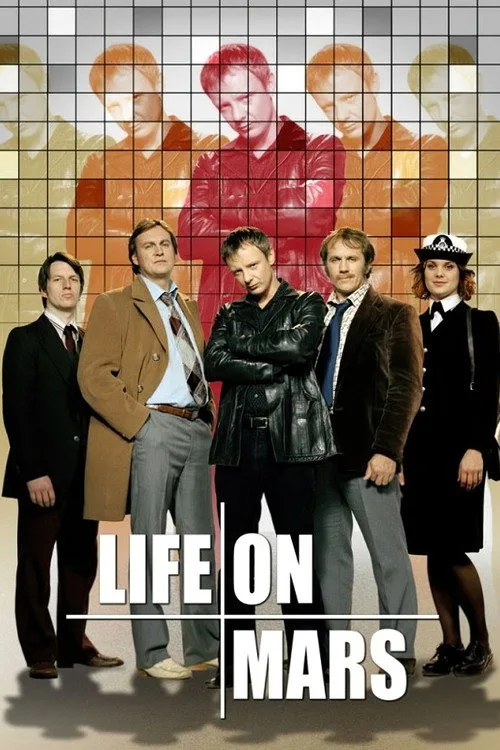
- Life on Mars, a time-slip police drama with the same knack for mixing genre and emotion.
- Misfits for a scrappier, adult take on ordinary Britons handed extraordinary powers.
More British genre television sits in the BBC catalogue.
The verdict
Doctor Who’s revival is uneven by design and wonderful at its peak, a family adventure series that keeps finding new ways to be about kindness, loss and curiosity. Its weaker seasons are real, but its best episodes rank with the finest British television of the century.
Rating: 4.5/5
Availability is a catalogue snapshot and can change. Confirm with the provider in your region.
Where to watch Doctor Who
Streaming: AMC+, Kanopy, Spectrum On Demand
By region: AMC+, Kanopy, Spectrum On Demand in the United States; Sky Cinema in the United Kingdom; Wavve in South Korea
Full scores and availability on the series page.
More like Doctor Who
 BBC
Life on Mars
Crime, Drama
 Netflix
The Umbrella Academy
Action, Sci-Fi
 Channel 4
Utopia
Mystery, Drama
 Netflix
Arcane
Animation, Action
Where can I watch Doctor Who?
Streaming: AMC+, Kanopy, Spectrum On Demand. Regional notes: AMC+, Kanopy, Spectrum On Demand in the United States; Sky Cinema in the United Kingdom; Wavve in South Korea.