Wallace & Gromit: Vengeance Most Fowl Review: Aardman's Triumphant Return
★★★★★ 5/5
The year's best family film is also its smartest tech satire.
Where to watch Wallace & Gromit: Vengeance Most Fowl
Streaming: Netflix
By region: Netflix in the United States; Netflix in the United Kingdom; Netflix in Indonesia; Netflix in India
Full scores & availability on the movie page.
Is Wallace & Gromit: Vengeance Most Fowl good?
Yes — it’s one of the best-reviewed films of the year, and the scores back it up. With a Celluloid Editorial Rating of 100, an Audience Snapshot of 97, a Metascore of 83, a Letterboxd rating of 4.1, and an IMDb rating of 7.5, this is about as close to universal agreement as a film gets. Critics and everyday viewers rarely land within a few points of each other, and here they practically shake hands, which says a lot about how cleanly Aardman has pulled off this comeback.
What is Wallace & Gromit: Vengeance Most Fowl about?
It’s a stop-motion caper about Wallace’s newest invention turning against him, with an old nemesis pulling the strings. Wallace fits out the house with Norbot, a chirpy smart-garden gadget meant to make life easier, while the ever-watchful Gromit senses trouble before his owner does. That suspicion proves well-founded once Feathers McGraw, the silent penguin villain from the duo’s earlier adventures, resurfaces and starts bending Norbot’s helpfulness toward his own scheme. What follows is a heist-flavored chase built from the same handcrafted charm the series has always run on, just with a sharper eye on modern gadgetry.
Should you watch Wallace & Gromit: Vengeance Most Fowl?
Absolutely, especially if you want a family film that respects both kids and adults in the room. The scores across every source point the same direction: this is a rare crowd-pleaser that also holds up to scrutiny. The Metascore trailing a bit behind the others suggests a handful of reviewers felt the 130-minute runtime ran long or that the new villain doesn’t quite match Feathers McGraw’s earlier menace, but that’s a minor wrinkle on an otherwise glowing reception. It rewards longtime fans of Wallace and Gromit while staying easy to follow for newcomers.
How does Wallace & Gromit: Vengeance Most Fowl compare to Chicken Run?
Aardman’s own Chicken Run is the closest sibling here — both films wrap a prison-break/heist structure around stop-motion clay characters and use a wry, distinctly British sense of humor to smuggle in sharper ideas underneath the jokes. Where Chicken Run was about the anxiety of being trapped inside an industrialized system, Vengeance Most Fowl redirects that unease toward smart-home technology and how easily convenience curdles into control. Both movies trust that tactile, handmade animation can carry real tension in its chase sequences, and both prove that a talking-animal premise doesn’t have to mean disposable entertainment. If you loved the ingenuity of Chicken Run’s escape plans, the heist mechanics and Gromit’s silent sleuthing here will scratch the same itch.
If you liked Wallace & Gromit: Vengeance Most Fowl
Ranked by genre overlap and Celluloid Score — full “movies like Wallace & Gromit: Vengeance Most Fowl” page.
 Golden Horse 2023
 Marry My Dead Body
Comedy, Mystery · 1h 49m
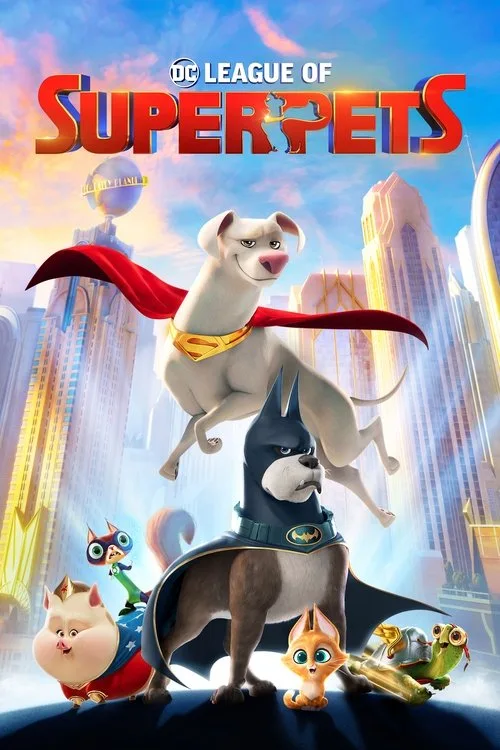
DC League of Super-Pets
Family, Comedy · 1h 45m
 Featured
 Hoppers
Animation, Comedy · 1h 44m
 Annecy 2016
 Your Name
Animation, Romance · 1h 46m
Streaming: Netflix. Regional notes: Netflix in the United States; Netflix in the United Kingdom; Netflix in Indonesia; Netflix in India.