Nowhere Special Review: James Norton's Quiet Devastation
★★★★★ 5/5
A weepie that earns every tear through restraint.
Where to watch Nowhere Special
Not confirmed on major subscription platforms in our US baseline — check regional listings.
Rent: Amazon Video, Apple TV, Google Play, YouTube, Fandango at Home
Buy: Amazon Video, Apple TV, Google Play, YouTube, Fandango at Home
By region: ITVX in the United Kingdom; TVING in South Korea; U-NEXT in Japan
Full scores & availability on the movie page.
Is Nowhere Special good?
Yes — this is a quietly devastating father-son drama that earns its emotion through restraint. Uberto Pasolini’s film carries a Celluloid Editorial Rating of 100 alongside an Audience Snapshot of 85 and a Metascore of 74, a spread that points to near-unanimous critical admiration with slightly more varied reactions once general audiences and other outlets are factored in. Letterboxd (3.7) and IMDb (7.4) both land solidly in “recommend” territory, reinforcing that this is a film people connect with regardless of how they encounter it.
What is Nowhere Special about?
It follows a terminally ill single father racing against time to find the right family for his young son. John, a window cleaner in England, learns he has only months left to live and begins the wrenching process of vetting prospective adoptive parents for his four-year-old, Michael. Rather than building the story around a diagnosis or a countdown clock, the film stays close to the small domestic moments the two share — breakfasts, errands, ordinary afternoons — and lets the audience feel what’s about to be lost through their accumulation.
Should you watch Nowhere Special?
Yes, if you’re open to a slow, tender drama rather than a plot-driven tearjerker. The near-perfect Celluloid Editorial Rating isn’t a fluke — James Norton’s performance holds the film together with a stillness that never tips into sentimentality, and young Daniel Lamont matches him scene for scene without ever feeling coached. The gap down to a 74 Metascore suggests a handful of reviewers found the material familiar rather than groundbreaking, but the Audience Snapshot and Letterboxd numbers show that familiarity hasn’t dulled its emotional impact. This isn’t a film for anyone wanting energy or plot twists; it rewards patience.
How does Nowhere Special compare to The Father?
Florian Zeller’s The Father is the closest recent touchstone: both are small-scale, performance-driven dramas about mortality and the people left to manage its practical fallout, and both trade melodrama for formal discipline. Where The Father uses fractured structure to put the audience inside a mind losing its grip, Nowhere Special stays linear and observational, finding its power in mundane rituals rather than technique. Anthony Hopkins’ showier, Oscar-winning turn in The Father also sits in contrast to Norton’s more withholding performance here — Pasolini’s film asks you to lean in rather than be swept along, and that quieter approach is exactly why it lingers.
If you liked Nowhere Special
Ranked by genre overlap and Celluloid Score — full “movies like Nowhere Special” page.

Small Things Like These
Drama · 1h 39m
 Featured
 It's a Wonderful Life
Drama, Family · 2h 11m
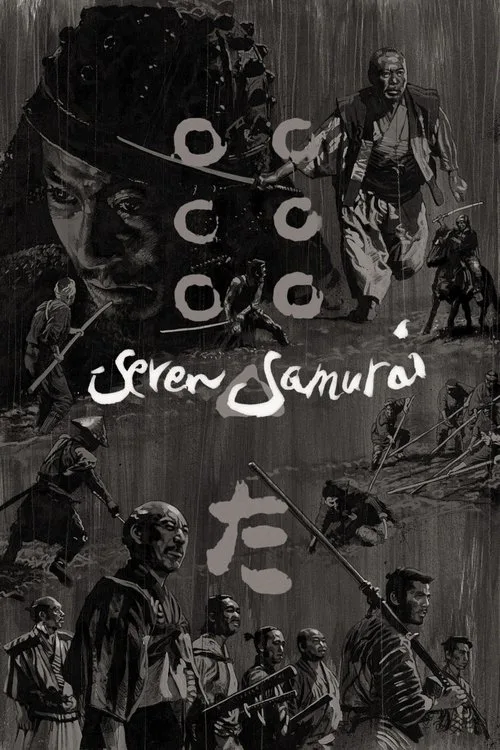 Venice 1954
 Seven Samurai
Action, Drama · 3h 27m
 Venice 1951
 Rashomon
Crime, Drama · 1h 28m
Rent: Amazon Video, Apple TV, Google Play, YouTube, Fandango at Home. Buy: Amazon Video, Apple TV, Google Play, YouTube, Fandango at Home. Regional notes: ITVX in the United Kingdom; TVING in South Korea; U-NEXT in Japan.