Left-Handed Girl Review: A Taipei Night Market Family Drama of Quiet Devastation
★★★★☆ 4/5
A modest, piercing drama that rewards attention.
Where to watch Left-Handed Girl
Streaming: Netflix
By region: Netflix in the United States; Netflix in the United Kingdom; Netflix in Indonesia; Netflix in India
Full scores & availability on the movie page.
Is Left-Handed Girl good?
Yes — this is a strong, well-reviewed drama, with a Celluloid Editorial Rating of 98%, an Audience Snapshot of 88%, a Metascore of 77, a 3.8 on Letterboxd, and a 7.3 on IMDb. That’s an unusually wide gap between the near-unanimous critic enthusiasm and the merely solid audience and user numbers, which tracks with a film built on patience rather than incident — the kind of quiet, observational work that plays better to viewers already leaning in than to a general audience expecting more forward momentum.
What is Left-Handed Girl about?
A single mother relocates to Taipei with her two daughters after years in the countryside, opening a stand at a crowded night market to rebuild a life for the three of them. The younger daughter’s left-handedness, and the family’s discomfort with it, becomes the film’s central image for the small ways difference gets policed inside a household. As the mother struggles to keep the new stand afloat, old resentments and quiet betrayals surface among the three of them, surfacing gradually rather than through any single dramatic rupture.
Should you watch Left-Handed Girl?
Watch it if you’re drawn to unhurried, character-driven family dramas that trust behavior over dialogue to do the storytelling. Shih-Ching Tsou directs with a documentary-like steadiness, letting the night market’s noise and motion frame a story about a mother and daughters who love each other imperfectly. Janel Tsai anchors the film as the mother, with Nina Ye and Shi-Yuan Ma bringing an unguarded quality to the daughters that suits the film’s low-key approach. Viewers who want clear confrontations or a tidy emotional arc may find the restraint frustrating; viewers willing to sit with implication will likely find it the film’s biggest strength.
How does Left-Handed Girl compare to Shoplifters?
Left-Handed Girl sits comfortably alongside Hirokazu Kore-eda’s Shoplifters in its interest in an improvised, economically precarious family unit held together by proximity and necessity as much as by declared love. Both films favor lived-in, market-and-street-level texture over stylization, and both withhold judgment on characters who lie to and disappoint one another. Tsou’s film is rougher around the edges and more tightly focused on a single household’s internal fractures, where Shoplifters widens its lens to a larger makeshift family — but the two share a conviction that the truest family drama is found in small daily transactions, not big speeches.
If you liked Left-Handed Girl
Ranked by genre overlap and Celluloid Score — full “movies like Left-Handed Girl” page.
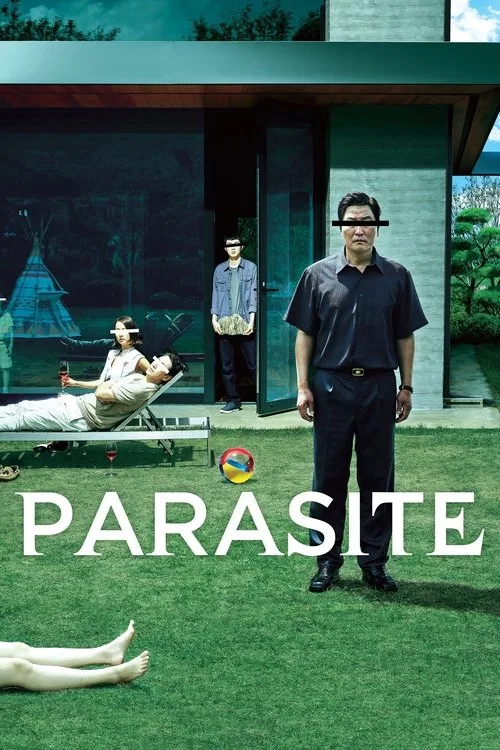 Cannes 2019
 Parasite
Thriller, Drama · 2h 12m
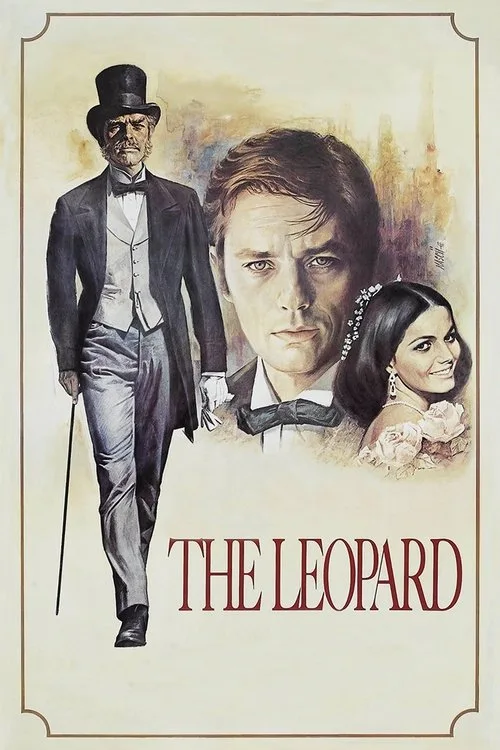 Cannes 1963
 The Leopard
Drama, History · 3h 5m
 Cannes 1960
 La Dolce Vita
Drama · 2h 54m
 Cannes 2006
 Pan's Labyrinth
Fantasy, Drama · 1h 58m
Streaming: Netflix. Regional notes: Netflix in the United States; Netflix in the United Kingdom; Netflix in Indonesia; Netflix in India.